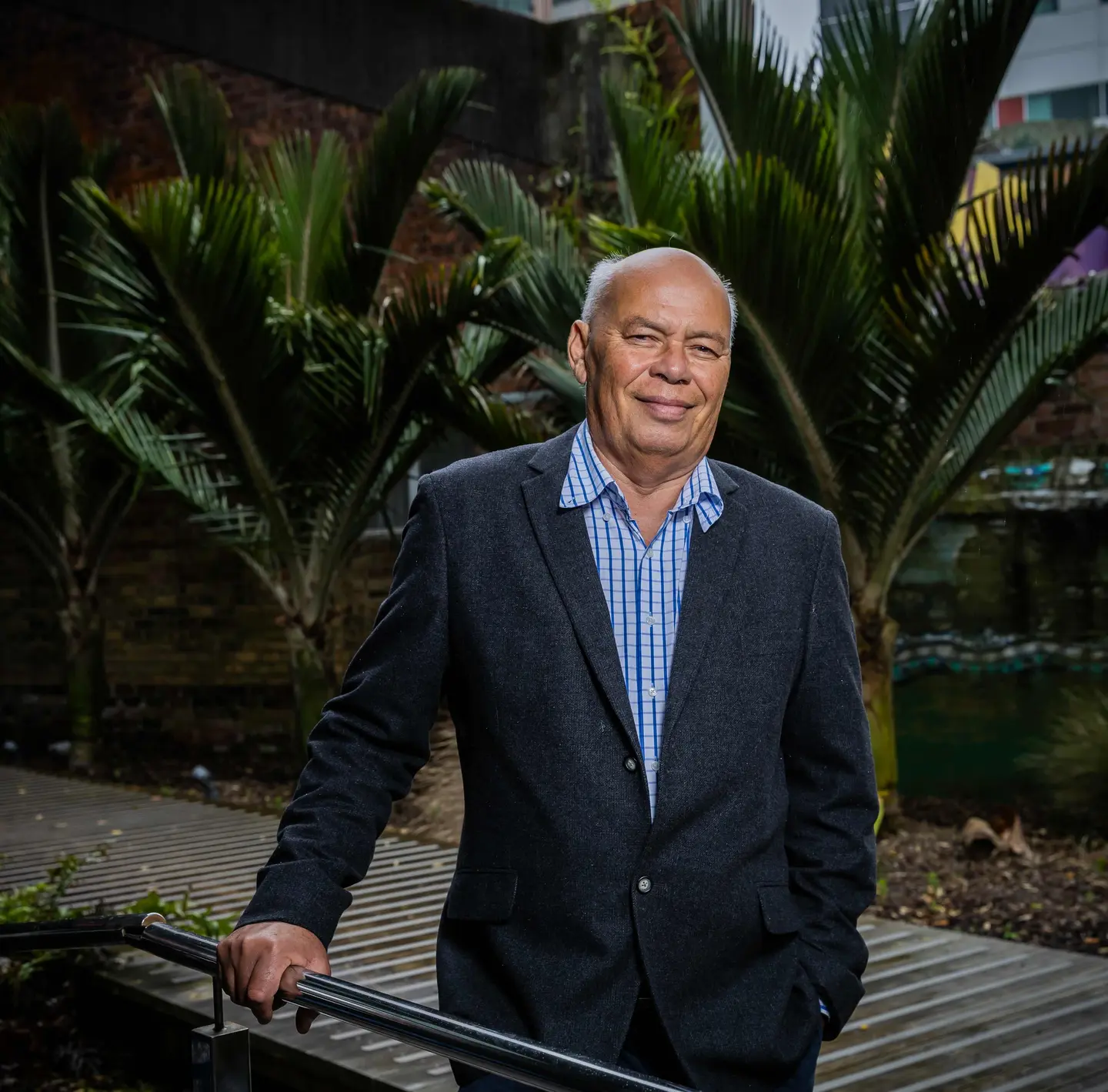
Professor Sir Collin Tukuitonga has argued that the world should look to the Pacific for solutions to climate change and health inequity, in a commentary released by Waipapa Taumata Rau, University of Auckland.
Tukuitonga wrote the piece ahead of pre-COP31 discussions in Fiji convened by the World Health Organization Asia-Pacific Centre for Environment and Health, known as ACE.
He said the talks would cover the health co-benefits of climate action and opportunities for closer regional collaboration before COP31. The meeting is co-hosted by Dr Sandro Demaio and Dr Liz Bennet of ACE.
Tukuitonga said he would appear on stage on 7 October with WHO Regional Director Dr Saia Ma'u Piukala, Hon Kate Thwaites MP, Australia's Special Envoy for Climate Change Adaptation and Resilience, and Dr Christina Newport of the Cook Islands.
He wrote that climate change, environmental damage, food insecurity and health inequities are now global questions, but are not new ones for Pacific peoples, who have adapted to environmental change through collective decision-making, stewardship of resources and knowledge passed between generations.
Tukuitonga said innovation is usually associated with technology companies and laboratories, but can also come from Indigenous knowledge systems, community leadership and collective action. Pacific innovation often remains invisible beyond the communities it serves, he said.
He pointed to the Treaty of Rarotonga, under which Pacific leaders established the South Pacific Nuclear Free Zone in 1985, as an early example of the region shaping international debate on disarmament, environmental justice and self-determination.
He also cited the Parties to the Nauru Agreement, which he said changed the management of some of the world's most valuable tuna fisheries and moved Pacific nations from passive resource holders to active decision-makers. The arrangement is now studied internationally as a model of sustainable resource management, he said.
Tukuitonga said Pacific leaders warned the world about climate change for decades and were too often overlooked. That advocacy, started by Pacific youth and supported by Pacific legal scholars and institutions, led to the International Court of Justice advisory opinion on climate obligations, he said.
Other examples in the commentary include Niue's Ocean Wide programme, which combines traditional knowledge, community leadership and scientific expertise to protect marine ecosystems.
On health, Tukuitonga said Te Poutoko Ora a Kiwa at the University of Auckland is now a World Health Organization Collaborating Centre, and that its researchers are working to eliminate cervical cancer across Pacific nations. He said the work is grounded in partnership and local knowledge rather than imposing solutions on communities.
He said the Maamaloa initiative is strengthening Pacific legal research on Indigenous legal traditions, governance systems and climate justice.
The question before COP31, Tukuitonga wrote, is not what the Pacific needs from the world but what the world can learn from the Pacific. The region has never lacked ideas or solutions, he said; what has been lacking is recognition.