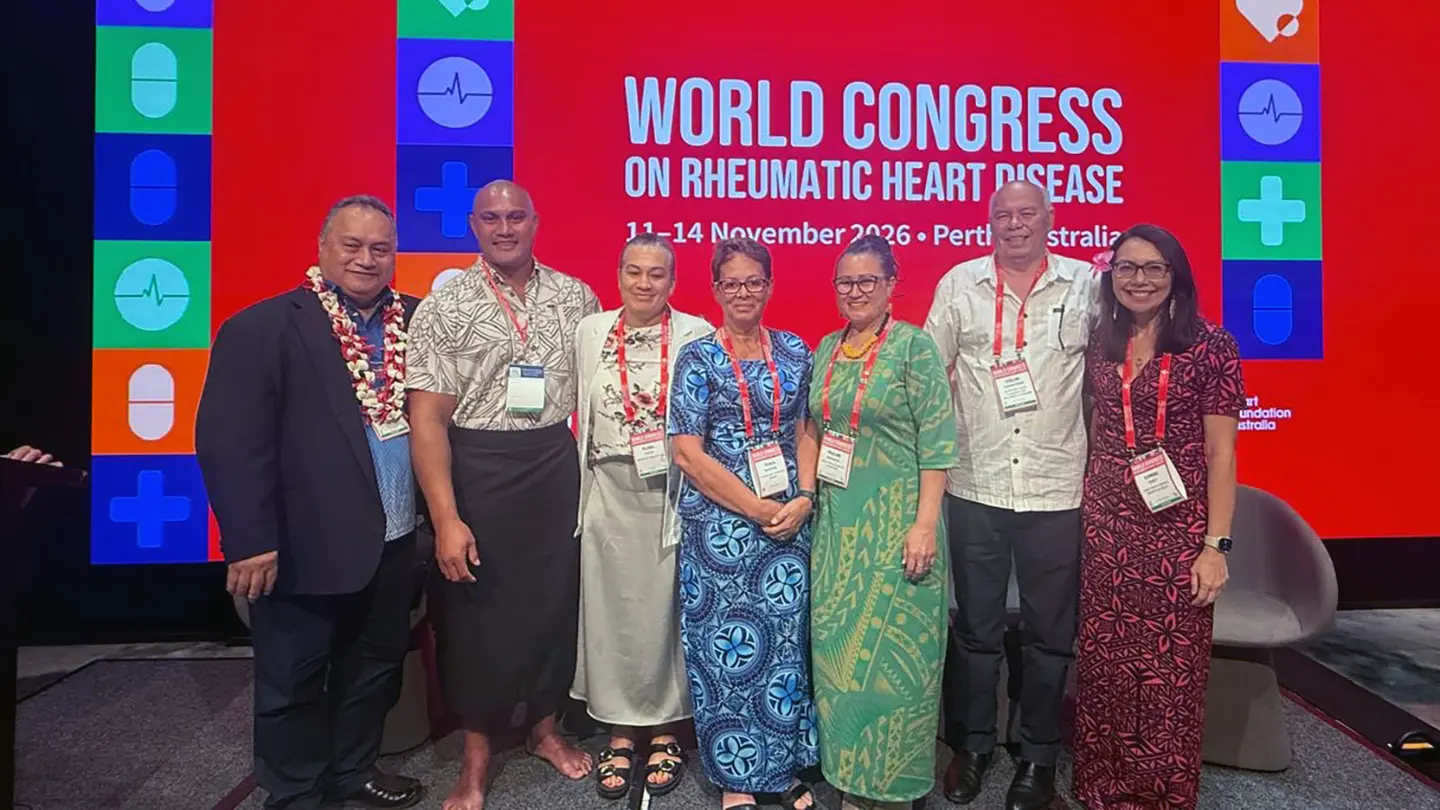
Pacific health leaders meeting at the World Congress on Rheumatic Heart Disease in Perth called for stronger Pacific leadership and long-term investment to reduce rheumatic fever among Pacific children, the University of Auckland said.
Professor Sir Collin Tukuitonga, Associate Dean Pacific at Waipapa Taumata Rau, University of Auckland, facilitated a session at the congress on acute rheumatic fever and rheumatic heart disease among Pacific children in New Zealand. It brought together clinicians, researchers and health leaders from New Zealand and across the Pacific.
Tukuitonga said the meeting showed both the scale of the problem and the need for Pacific-led solutions. The conditions are largely preventable, he said, and the high rates among Pacific children reflect the conditions in which people live, learn and get healthcare rather than biology or genetics.
For too long the focus has been on treating symptoms rather than the underlying drivers, he said, naming overcrowded housing, poverty, barriers to primary care and fragmented services. The solutions are known, he said, and what is needed now is sustained commitment and investment, with Pacific communities as partners in designing the response.
Former professional rugby player Robert Fruean, whose career was affected by rheumatic heart disease, also took part in the session.
"Rheumatic heart disease changed the course of my life and my rugby career, but what is even harder is seeing your own child go through rheumatic fever," Fruean said.
He said no family should have to face a disease known to be preventable, and called for healthier homes and better access to care. Tukuitonga said Fruean's experience was a reminder of the lifelong consequences the disease can have for individuals and families.
The Pacific session panel included Dr Corina Grey, Director of Public Health at the Ministry of Health, and Asiata Professor Satu Viali, cardiologist and Vice Chancellor of Oceania University of Medicine.
Also on the panel were Dame Teuila Percival, paediatrician and Honorary Associate Professor at the University of Auckland; Dr Flora Lutui, a paediatrician from Tonga; and Pauline Fuimaono Sanders, National Director of Pacific Health at Health New Zealand | Te Whatu Ora. The New Zealand Heart Foundation sponsored the session and helped with travel costs for several panellists.
Data discussed at the congress showed Pacific peoples remain disproportionately affected by rheumatic fever, with children aged five to 14 carrying the heaviest burden and little sustained improvement despite decades of interventions, the university said.
Percival said the key drivers are poor housing, overcrowding, low household incomes and unequal access to primary healthcare. More than two thirds of Pacific cases are in South Auckland, she said, and efforts should be concentrated there, including early detection through school-based echo screening.
The congress ended with endorsement of the Perth Declaration, which aims to eliminate rheumatic heart disease as a public health problem by 2040. It also sets an interim target of cutting deaths among people under 25 by at least 50 per cent by 2035.
The declaration was developed by the World Heart Federation, the National Heart Foundation of Australia and delegates at the congress. It calls for investment in prevention, better housing and environmental health, community-led health programmes, reliable access to penicillin and faster development of a Strep A vaccine.
Tukuitonga said the declaration shows international consensus that elimination is achievable, and that the challenge is ensuring governments match that knowledge with long-term investment.