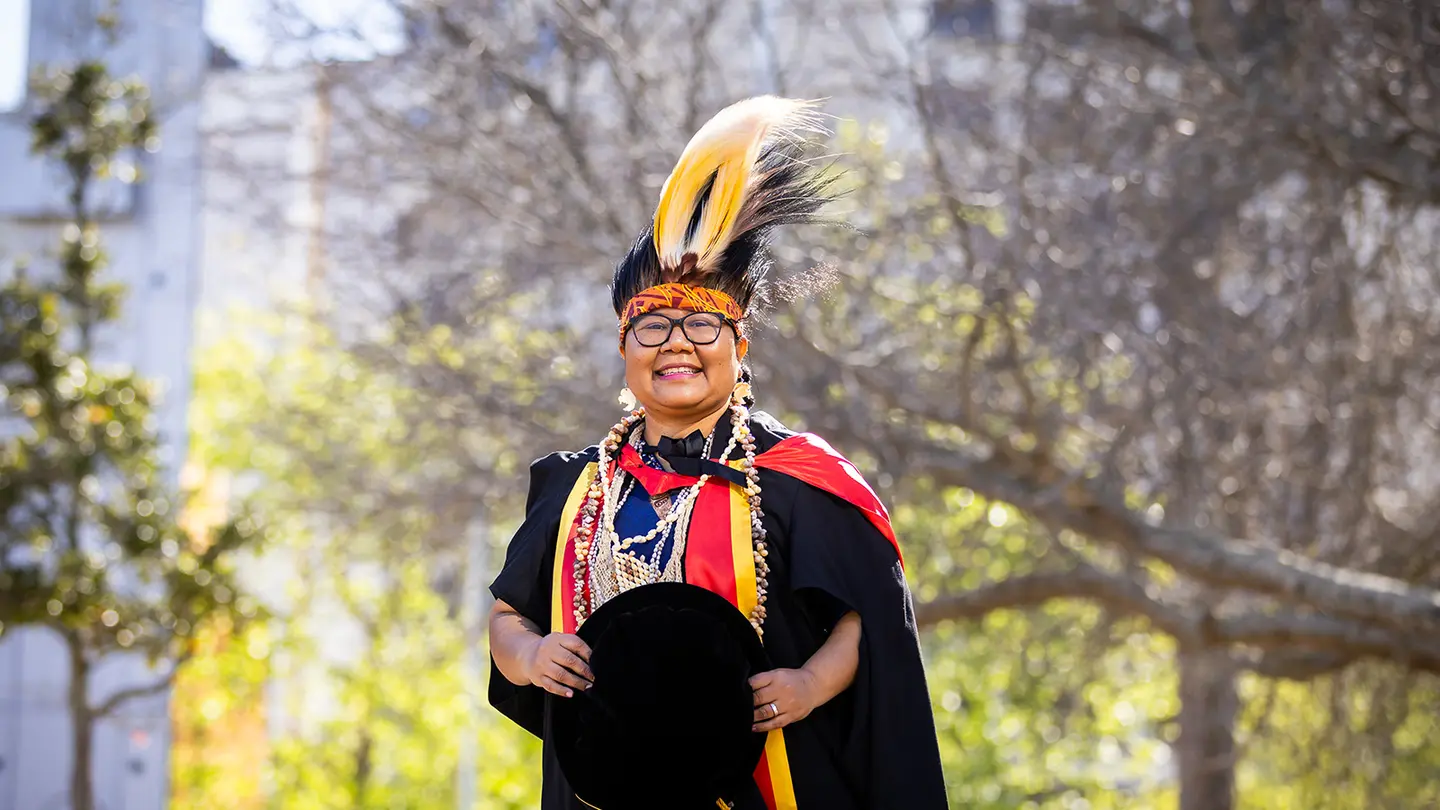
Dr Veronika Triariyani Kanem graduated with a PhD from Waipapa Taumata Rau, University of Auckland, on 24 September for research on noken, the traditional string bags of the Muyu people, the university said.
Kanem is from the Muyu region of South Papua in West Papua. Her doctoral research examined the cultural, environmental and social significance of noken, which are handmade by Muyu people and used in daily life, ceremony and identity.
According to the release, the research drew on oral histories, community knowledge, ethnographic work and cultural practice, centring the voices of Muyu people. Kanem looked at how Indigenous knowledge passes between generations and how communities maintain cultural continuity through social and environmental change.
Across West Papua, noken are used to carry food, books, babies and possessions, and are present at births, marriages, engagements and community ceremonies. The release said they are widely regarded as symbols of prosperity, womanhood, kinship and connection to the land.
"Noken carry our stories, our identity and our relationships," Kanem said. "They connect generations of knowledge and remind us that culture is something we live every day."
Her earlier research examined how environmental change and deforestation threaten access to the natural materials used to weave noken, which could disrupt the passing on of cultural knowledge. Kanem said the future of noken is connected to the future of the environment.
The thesis also set out what Kanem calls a noken weaving methodology, an Indigenous research approach drawn from the way noken are made, shared and used in Muyu communities.
She said she first tried to fit her research within other Pacific methodologies such as Tivaevae, Kakala and Talanoa, but found they did not fully suit the West Papuan and Muyu context. In her final year she developed the new approach, she said.
Kanem said the method treats knowledge as relational and collective, built through listening, reciprocity and community participation, rather than as something extracted from people.
Last year she co-curated the exhibition Noken / Men: String Bags of the Muyu Tribe of Southern West Papua with Lagi-Maama at the University of Auckland Library, alongside a publication based on her doctoral work.
The exhibition has since travelled in New Zealand, showing at Auckland City Library from August 2025 to April 2026 and at Canterbury University Central Library from 28 July to 2 September 2026. The work also features in the Our Ocean of Islands exhibition at the New Zealand Maritime Museum from August 2026 until early 2028.
According to the release, the exhibition aims to raise awareness of environmental destruction in southern West Papua, where it said 2.5 million hectares of Indigenous land have been allocated to a food and energy estate known as the National Strategic Project, or PSN. The release said oil palm expansion has also affected ancestral lands and forests where weaving materials are gathered.
Kanem's supervisors were Yvonne Underhill-Sem and Mark Busse. She acknowledged her family and her late mother, who died earlier this year, and said the achievement belonged to her family, supervisors and the people at home who entrusted her with their stories.