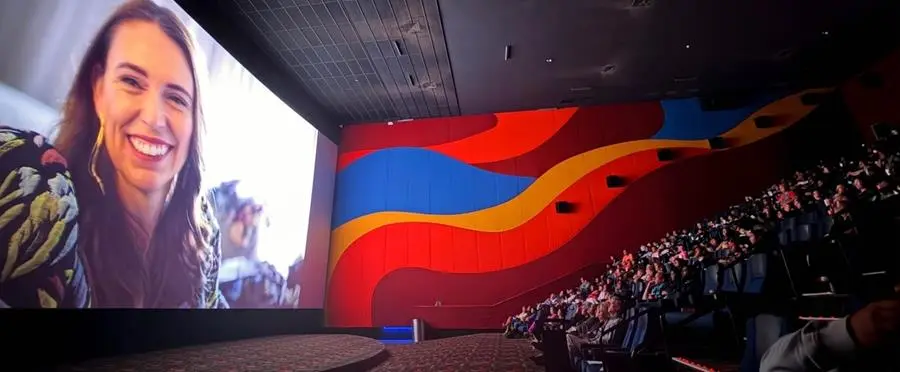
More than 2,500 people across the Pacific, including in Solomon Islands, took part in the 6th Pacific Human Rights Film Festival, which used film screenings and talanoa sessions to open discussion on human rights issues.
The Pacific Community (SPC) said the festival began in early September and runs to the end of October, with free screenings in Suva, Nadi, Lautoka and Labasa in Fiji and in Australia, Cook Islands, Federated States of Micronesia, Hawai'i, Kiribati, Marshall Islands, Nauru, New Caledonia, Saipan, Samoa, Solomon Islands, Tonga and Vanuatu.
This year's theme was 'Light in the Darkness'. SPC said the programme covered post-colonial approaches, with an emphasis on films led and directed by women, on motherhood and on younger generations in the Pacific.
In Fiji, pre-events in September looked at artistic intellectual property rights. The main Suva programme ran from 3 to 24 October at Damodar City Cinema and the University of the South Pacific, and public screenings in Fiji alone drew more than 1,500 people.
The festival screened documentary and narrative films that have won awards at festivals abroad, including the Emmys, LUX, Cannes, Gaudi and Berlin, and Pacific-made films recognised at FIFO Tahiti, the Hawai'i International Film Festival and Doc Edge in New Zealand. For many Pacific Island countries, SPC said, it was the first chance to see those films, and free of charge. The programme also included the Fijian public premiere of An Unofficial Colonial History of the Feejee Islands AKA VITI.
Discussions after each screening brought audiences together with experts, people in the region directly affected by the topics raised, and film directors and film subjects. Most films screened in Fiji had subtitles for people who are deaf or hard of hearing, and many discussions and other events had sign language interpretation.
Miles Young, Director of the Human Rights and Social Development division at SPC, said the festival continues to attract people from outside the human rights and filmmaking fields, and that discussions after the films have gained depth over the years.
"Over time, people who come to the Festival are more comfortable discussing difficult issues in that space, and have broadened our understanding of what human rights mean for us in the Pacific," Young said.
Milla Vaha, Senior Lecturer in Politics and International Affairs at USP, said the festival has moved human rights learning outside the classroom, and that the number of USP campuses taking part has grown each year.
Heike Alefsen, Regional Representative of the Pacific UN Human Rights Office, said the festival has always sought to link human rights to lived realities in the Pacific and beyond.
SPC ran this year's festival with USP and the Pacific UN Human Rights Office, with support from the Delegation of the European Union to the Pacific, the French Embassy in Fiji, Kiribati, Nauru, Tonga and Tuvalu, the British High Commission in Fiji, the Embassy of Spain in Fiji, the Oceania Centre for Arts, Culture and Pacific Studies and the Centre for Sustainable Futures.