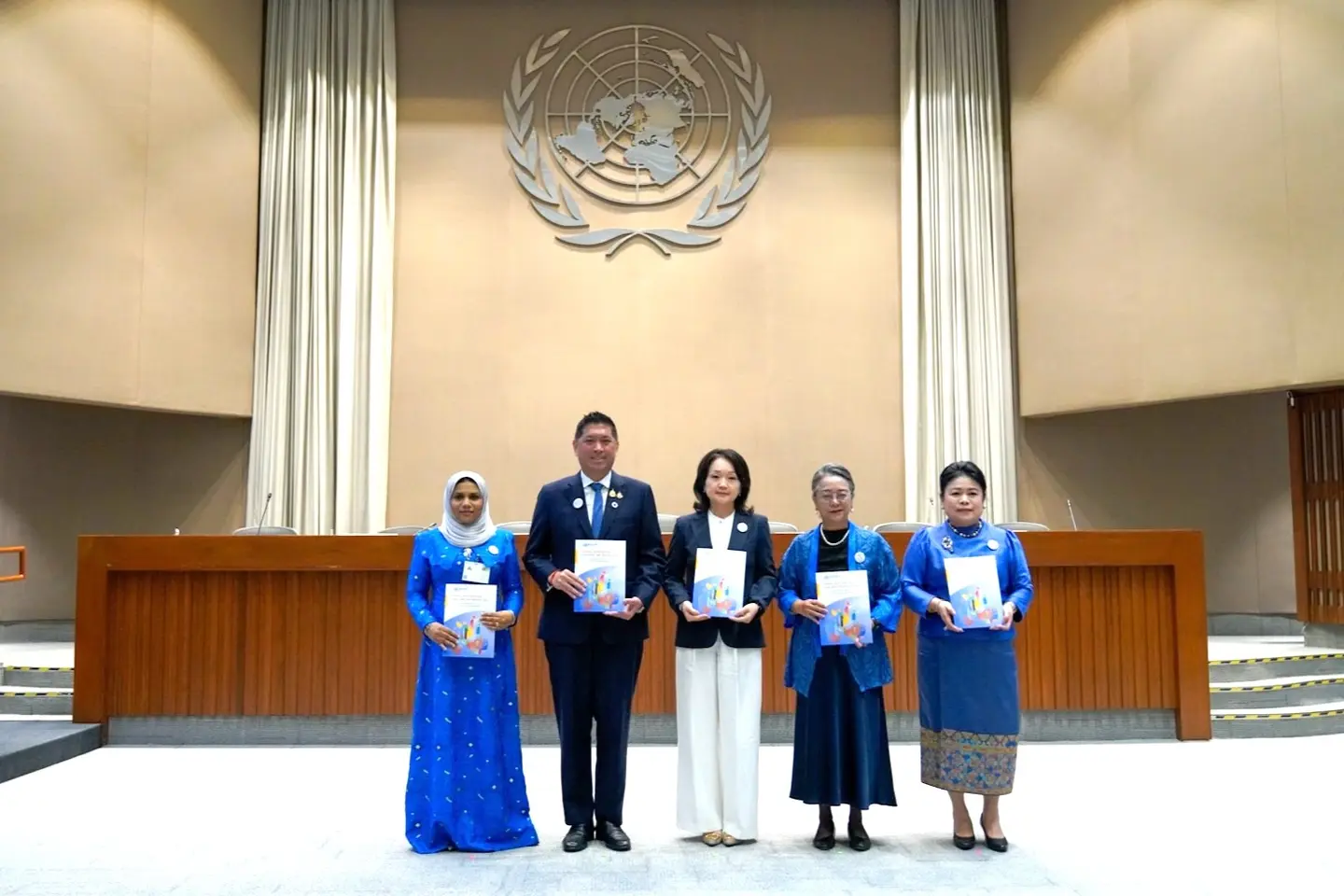
More than 1.1 billion people in Asia and the Pacific lived in poverty in 2026, including 310 million in extreme poverty, a United Nations report launched in Bangkok on 11 November found.
The Social Outlook for Asia and the Pacific 2026 was released by the Economic and Social Commission for Asia and the Pacific (ESCAP). The commission said poverty extends beyond a lack of income to take in deprivation in education, health, nutrition, housing and access to essential services.
A further 1.2 billion people in the region are not poor but are vulnerable to falling back into poverty, ESCAP said. It said the figures show the scale of the challenge and the need to look beyond income when measuring well-being.
The last three decades have brought a marked fall in the number of poor people across the region, the commission said, as governments brought in social schemes to help people escape poverty and withstand economic uncertainty.
United Nations Under-Secretary-General and ESCAP Executive Secretary Armida Salsiah Alisjahbana said the nature of poverty and vulnerability is changing as climate change, demographic change, digital transformation and recurring economic shocks reshape who is poor and how people experience deprivation.
The report was launched on the opening day of the ninth session of the Committee on Social Development, where ministers and senior policymakers are meeting with civil society representatives. ESCAP said they will look at policy options for eradicating poverty and expanding social protection, and at developing comprehensive care systems.
Countries across the region now treat care systems and universal, inclusive social protection as investments that protect people and advance gender equality while supporting just transitions, the commission said, as governments adapt to ageing populations and to economic and climate pressures.
ESCAP listed universal health coverage among effective government measures, along with targeted policies and stronger public-private partnerships to create jobs for persons with disabilities, and job training on renewable energy where fossil fuels are expensive. On child stunting, it pointed to parental education and better maternal nutrition, alongside improved newborn health care.
Alisjahbana said the region is well placed to lead this change by strengthening social protection and health care and by expanding skills and labour market opportunities, with employment policies aligned to demographic realities.
The committee is also expected to review progress and consider ways to speed up action on regional commitments, including the Madrid International Plan of Action on Ageing and the Jakarta Declaration on the Asian and Pacific Decade of Persons with Disabilities (2023–2032), as well as the Action Plan to Strengthen Regional Cooperation on Social Protection.