The Australian government should reflect on its own history of mineral extraction in the Pacific and engage more actively in the debate over deep-sea mining, ANU PhD candidate Benjamin Fullarton wrote on the Devpolicy Blog.
Fullarton is a doctoral candidate in international relations at the Australian National University examining the politics of the environment and extraction.
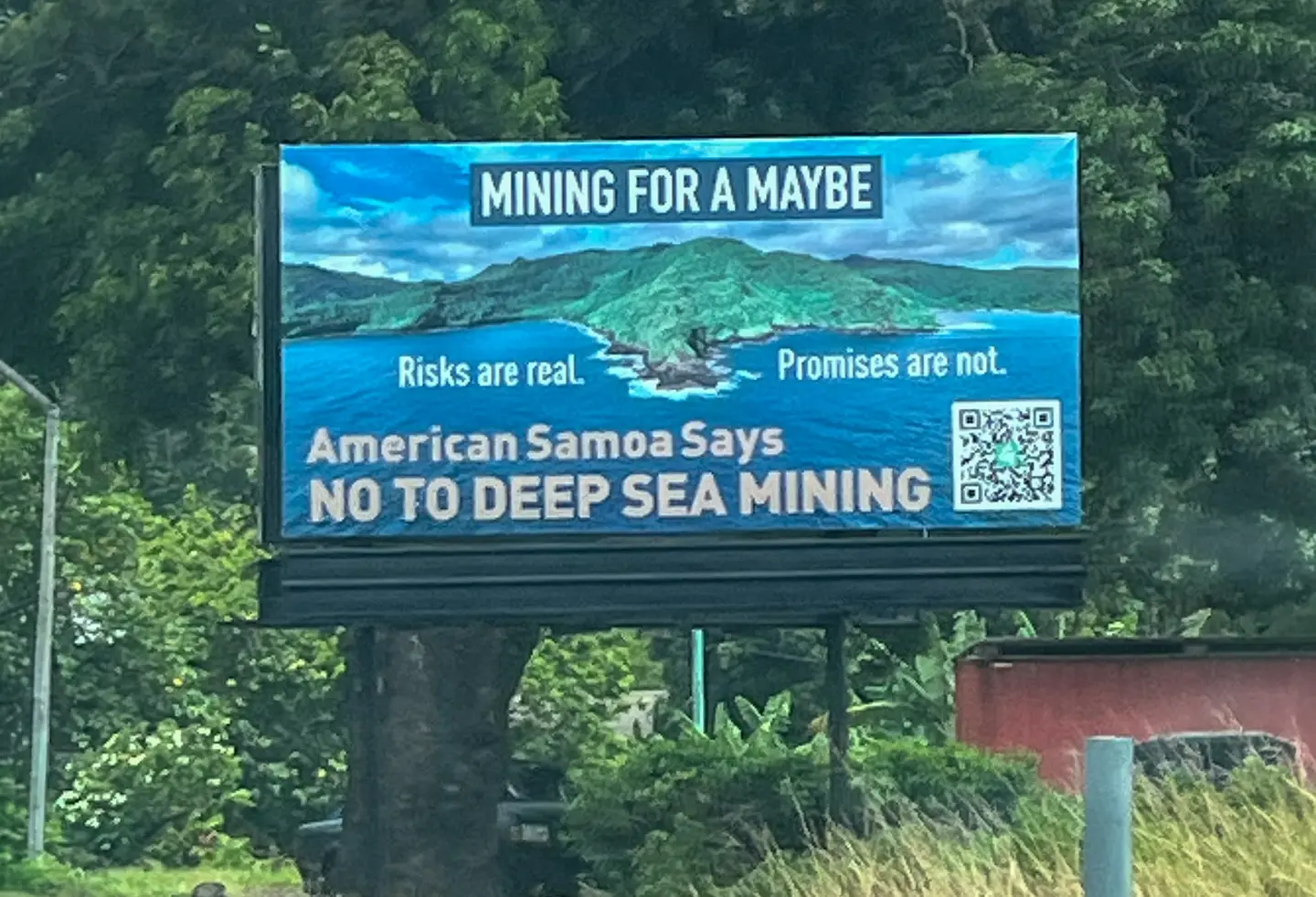
Commercial deep-sea mining has long been discussed in the abstract, he wrote, but the US government's auction on 19 November of 31.5 million acres of leases off the coast of American Samoa means it could be closer than ever to reality.
American Samoa is not the only site being targeted. A Lowy Institute report suggests commercial extraction could be imminent in the Pacific by 2027 as China and the United States compete for critical minerals, with consequences for the ocean environment and for Pacific regional unity.
The same report points out that the Australian government has largely been missing from the debate, Fullarton wrote, a position he said was less and less defensible. Any Australian position should be guided by engagement and consensus building with the Pacific, where opposition is strong but opinion is not unanimous.
Advocates have justified deep-sea mining as a public good and a low-impact way of collecting critical minerals, he wrote. The Trump administration has called critical minerals vital to national security and economic prosperity, and the acting director of the Marine Minerals Administration, Mike Olsen, described them as essential for national defence and for securing domestic supply chains when he announced the lease sale.
US Secretary of the Interior Doug Burgum said the nodules on the sea floor had only to be vacuumed up, while The Metals Company chief executive Gerard Barron has said deep-sea mining was the easiest way to solve climate change and that he liked the fact it would benefit Pacific Island communities.
Such arguments ignore the environmental risks and the extent of opposition in the region, Fullarton wrote. In American Samoa, communities and their political representatives have objected, and community leaders and environmental groups have brought a legal challenge, pointing to risks to marine resources and to the fa'asāmoa way of life.
Australia's history with the Panguna mine in Bougainville is the most damaging example of where benevolent-sounding justifications lead, he wrote. The mine helped start the worst conflict in the Pacific since World War II and left environmental damage still acutely felt, while the Australian government of the day argued the project was essential for Papua New Guinea's economic independence.
The then minister for territories, Charles Barnes, said those seeking to block the mine were "in the structure of ignorance, superstition and prejudice". The rhetoric used by deep-sea mining advocates now is more humanitarian but rests on the same assumption that Pacific communities opposing extraction are misguided, Fullarton wrote, and Barron has called demands for a moratorium a vote against science.
He wrote that deep-sea mining would not bring devastation on the scale of the Bougainville conflict, but that the risks for many in the Pacific could still prove very consequential. He pointed also to the strip mining of Naoero and to the displacement of the entire population of Banaba Island for phosphate mining.