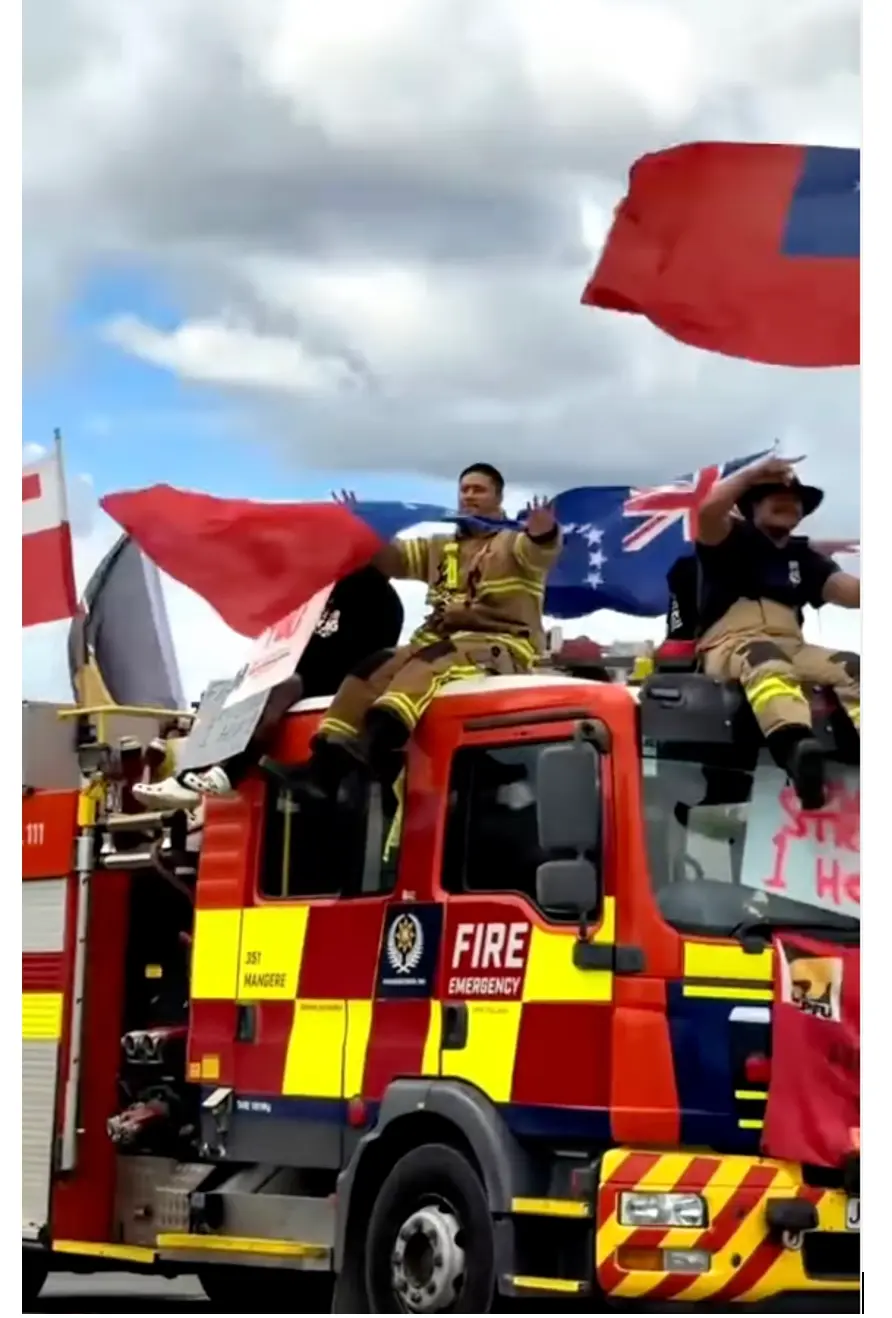
Pacific flags flying from cars, houses and whole streets across Auckland during the Rugby League World Cup are a public celebration of Pacific identity, University of Auckland Pacific Studies senior lecturer Dr Caleb Panapa Marsters said.
Marsters, who is Cook Islands Maori, said the display of pride is one of the things he likes most about international rugby league, with families getting together and houses, cars, fire trucks and trees covered in flags.
The support has gone well beyond the teams in the tournament, he said. He has seen Niue, Tokelau and Tino Rangatiratanga flags at the parades, and even a Mexican flag.
The teams representing Samoa, Tonga, Fiji and the Cook Islands are largely made up of players born in New Zealand or Australia, Marsters said, with only a handful born in the countries they represent. Those players have spent most of their lives in Auckland, Sydney, Brisbane or elsewhere, yet their sense of responsibility to their homelands remains strong.
Pacific identities have never been confined by national borders, he said, and people born and raised in Auckland or Sydney can still have a strong sense of belonging to Samoa, Tonga, Fiji or the Cook Islands.
Marsters pointed to the work of Cook Islands scholar Dr Emma Powell and the Cook Islands concept of 'akapapa'anga, or ancestry, which he said is about not only where people come from but how ancestors continue to live through names, stories, relationships and responsibilities.
"That's what I love about it. These identities don't necessarily compete with one another. You can play for the Kiwis and be proud of your Samoan heritage. You can play for the Kangaroos and still be a proud Tongan," Marsters said.
Young people should not be made to feel they must fit into one box when many come from several places and hold responsibilities to different communities, he said. The Kiwis and Kangaroos also carry Pacific talent, and many Pacific players have both Maori and Pacific ancestry.
Marsters said Papua New Guinea's passion for rugby league is on another level, pointing to the noise and energy of the crowd at PNG's game against Lebanon in Port Moresby. Most PNG players were born in the country, he said, so pride among people living in their homeland sits alongside the pride seen among diaspora communities.
He also welcomed the Women's Rugby League World Cup and the Wheelchair Rugby League World Cup, and said he would like to see Samoa, Tonga, Fiji, PNG and the Cook Islands represented across all three competitions. That would need more investment in Pacific women's sport and Pacific disability sport pathways, he said.
Marsters said families should enjoy the tournament, and that win or lose, children will remember the flags, the parades and the noise.