Leatherback turtle nests at Haevo beach in Isabel Province have increased by 10.6 per cent a year since the communities around it stopped harvesting the turtles and their eggs in 2013, a new study has found.
The study, published this month in Global Ecology and Conservation, estimates that about 381 leatherbacks nest on four beaches guarded by community rangers: Haevo, Sasakolo and Litogahira in Isabel, and Baniata on Rendova Island in Western Province.
That makes Solomon Islands home to the second-largest known nesting population of the critically endangered West Pacific leatherback, the authors say, after two beaches in Indonesia's Southwest Papua Province.
Rangers recorded 941 nests on the four beaches between May 2024 and April 2025. Litogahira, watched only since October 2024, had the most with 396, followed by Baniata with 330, Haevo with 137 and Sasakolo with 78. The true number is likely higher, the researchers say, as Lilika in Isabel and other beaches still see some nesting.
Two beaches, two directions
At Sasakolo, on Isabel's southwest coast and once among the country's largest nesting sites, nest numbers have fallen by 3.3 per cent a year since the mid-1990s: from more than 200 nests in a summer season then to fewer than 100 in the 2020s.
Protection there has come and gone. A programme started in 2006 ended in 2010 over land disputes and disagreements within clans about how ranger pay and equipment were shared, and the harvesting of eggs and turtles resumed.
After a court ruling settled the ownership of the land in 2020, the landowning communities, the Isabel Provincial Government and The Nature Conservancy (TNC) signed new agreements. Paid women and men rangers have guarded the beach year-round since October 2021.
Haevo's protection began with the community. Leaders worried by falling numbers asked TNC for help at a provincial meeting in 2012. Haevo was not then counted among the main nesting beaches, but the community's interest and a local politician's backing won TNC over. Watched year-round since 2013, Haevo now has more nests a year than Sasakolo.
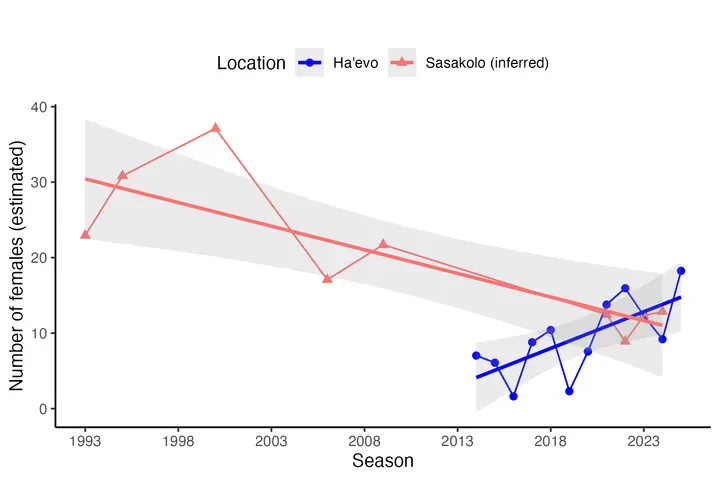
"Under the right social conditions and with sufficient external support, community-based conservation can reverse declines at leatherback nesting beaches," the authors write.
The authors also urge caution. The Sasakolo record has an 11-year gap, and there is no count from Haevo before 2013, so the data cannot fully settle whether the two beaches were already on different paths before protection began.
Loyal to their beach
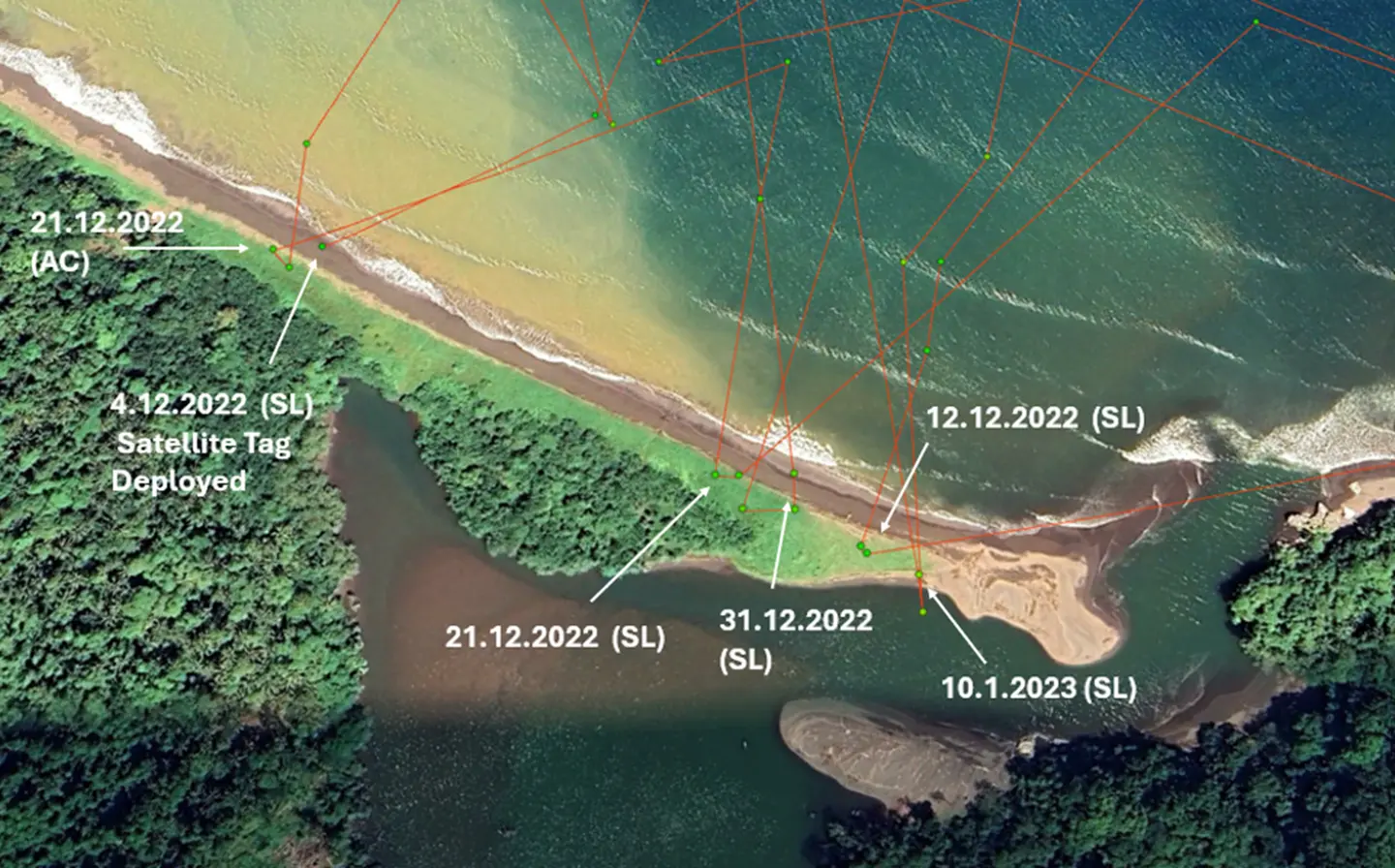
Between November 2022 and July 2024 the researchers fitted satellite tags to 22 nesting leatherbacks on three of the beaches. The 21 that stayed to nest again laid 87 more clutches, each on the beach where it was tagged. That loyalty, the authors say, helps explain why Haevo recovered quickly once the harvest stopped.
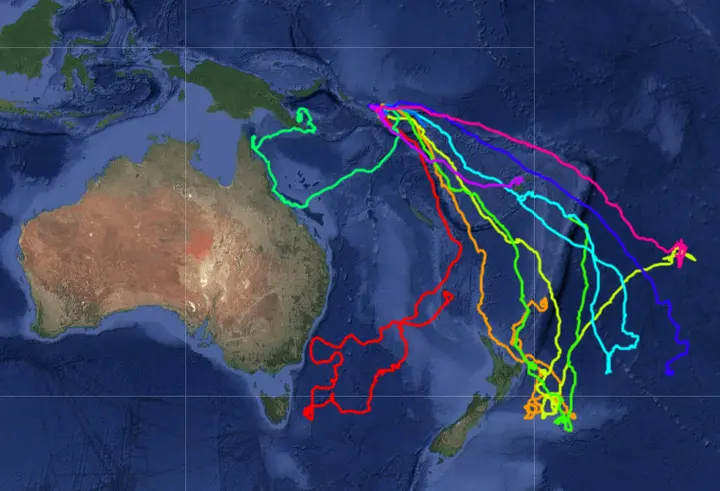
After nesting, nearly all the tagged turtles from Haevo and Sasakolo swam southwest to feeding grounds off New Zealand and southern Australia. As turtles from both beaches share those waters, the authors argue the nesting beaches made the difference, and remain the most threatened stage of a leatherback's life.
Rangers patrol at night, tag nesting females and move nests at risk from high tides or predators to higher ground or hatcheries. In the 2024-25 season they moved 84 per cent of the documented nests on the three Isabel beaches.
Ten women joined Haevo's rangers in 2022, and three women and 15 men were trained for Litogahira in 2024. TNC says more than 20 local women have been trained and employed as rangers since 2021.
TNC says the species remains critically threatened, with fewer than 100 nesting turtles expected to remain by 2040 without continued protection.
The authors call for long-term funding for ranger programmes across the region, for protection to reach beaches where turtles and eggs are still taken, and for help even where few turtles nest, as such beaches can recover.
The study's 11 authors include John Pita of TNC's Isabel office, Dudley Satovaki of the Isabel Provincial Government's environment office and Johnson Haron of the Baniata community. The US National Oceanic and Atmospheric Administration (NOAA) funded the work.
The study, Community-based conservation can turn the tide for nesting leatherback sea turtles, is free to read online.