The Ministry of Health and Medical Services has started a national review of the country's health indicators and reporting forms to cut reporting clutter and make routine data easier for health workers to use, the World Health Organization said on 30 September.
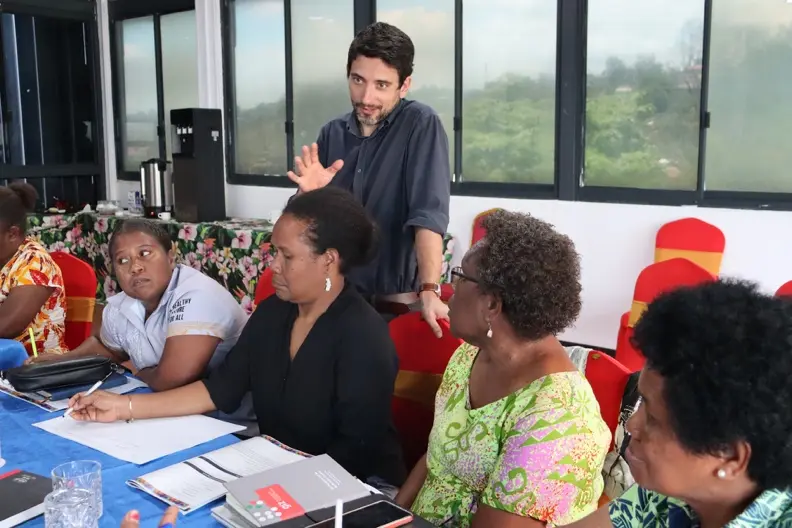
The review was launched in Honiara in the week before the announcement. The ministry brought together programme directors, provincial health leaders, managers and partners to work out which indicators are essential and which reporting requirements can be simplified.
WHO said the meeting also looked at how routine data can better support action at national level, in the provinces and at health facilities.
According to WHO, health workers and managers must work across multiple data-entry forms and indicators spread over more than 500 dashboards and 39 datasets. Of the 532 dashboards, 71 per cent record fewer than 50 visits, and only 10 per cent of aggregate forms are used consistently and submitted on time.
A data quality study carried out in about 125 health facilities in 2025 found that in 56.4 per cent of facilities data entry is assigned to a single staff member, WHO said. It found 86.7 per cent of respondents need more than an hour to complete the monthly reporting tally, one of many forms required.
WHO said the findings point to the need to simplify and prioritise indicators and forms. That would reduce the administrative burden on health workers and improve data quality, it said.
Director of the National TB and Leprosy Programme Dr Henry Kako said staff need data that helps them see a problem quickly, rather than reports that take more time to understand. Monthly summaries should show when medicines are running low, when fewer children are being vaccinated, or when disease patterns may signal an outbreak.
Acting Permanent Secretary of Health Dr Gregory Jilini said the review is about making sure the information collected from health facilities is useful and practical, and focused on current priorities. Clearer indicators will help managers and health workers see problems earlier and use resources better, he said.
"The challenge is not the absence of data. It is whether programme managers and provincial teams can find, understand, trust and act on the data," said Dr Howard Sobel, WHO Representative in Solomon Islands.
The last major review of indicators was completed in 2017, WHO said. Since then health priorities have changed, reporting demands have grown, and digital systems have expanded.
Australian High Commission First Secretary for Health Jemma Thompson said strong health data helps turn information into better services. She said the review will help identify which data is most useful and where the gaps are.
WHO said the review will also look at whether routine reporting captures risks that are becoming more important for Solomon Islands, among them climate-sensitive diseases, environmental health threats, water and sanitation problems, food security and emerging infections.
Consultations with health programmes and partners will continue in the coming months to settle on a smaller set of indicators and reporting tools.