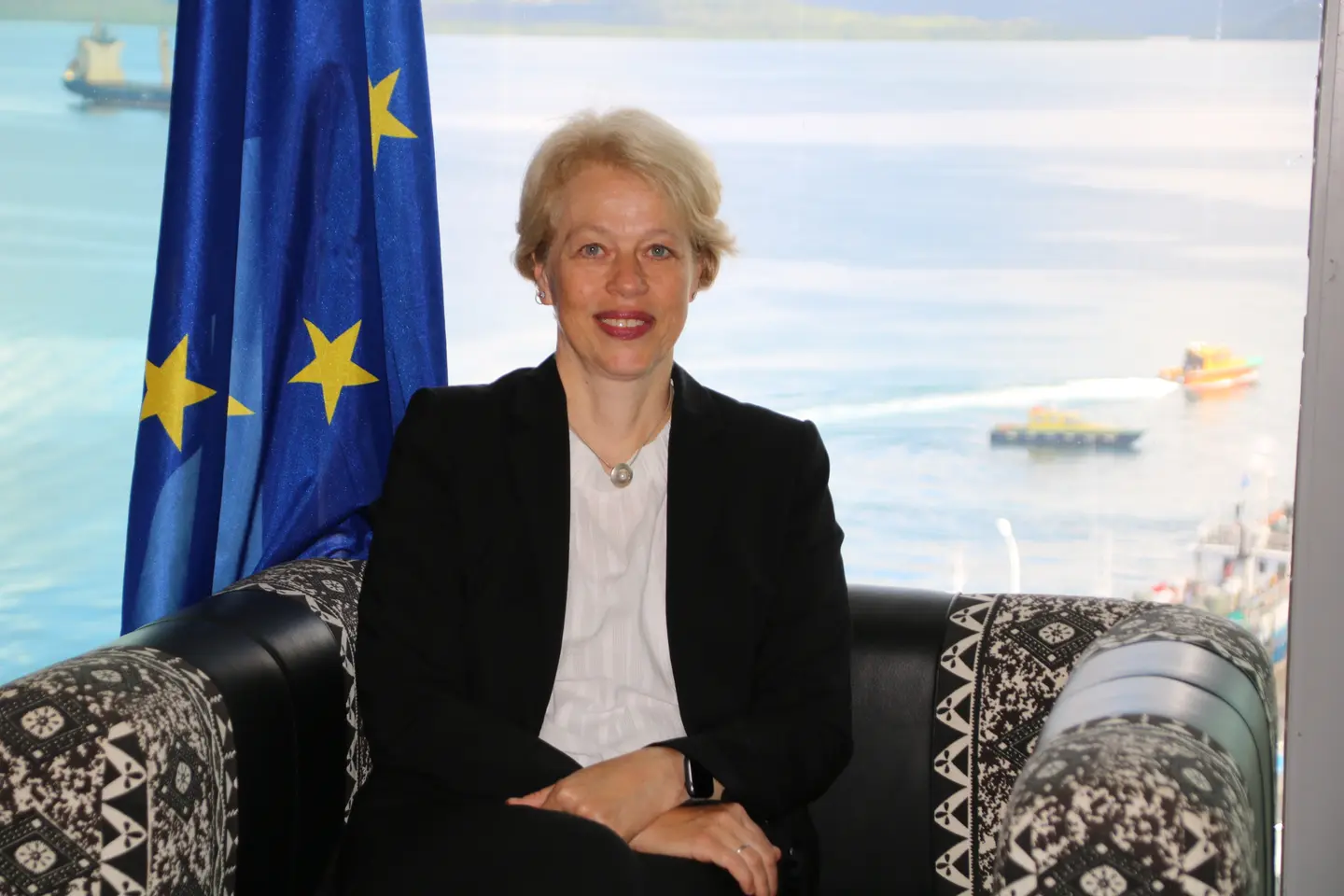
European Union Ambassador to the Pacific Barbara Plinkert said Russia's attacks on Ukrainian shipping, ports and warehouses have cut Ukraine's grain exports in half and will drive up global food prices well into 2027.
In an opinion piece distributed by the Delegation of the European Union to the Pacific, Plinkert said Russia is blocking Ukraine's agricultural exports across the Black Sea, the Danube River and overland corridors, and is using food as a weapon against vulnerable people in Africa, Asia, the Middle East, Latin America and, indirectly, the Pacific.
She said missile and drone strikes during Ukraine's harvest season have trapped grain inside the country, and that more than nine million tonnes could rot by November because storage has been destroyed.
An estimated 645 million people face hunger worldwide, she said, and vulnerable communities are the least able to absorb another artificial supply shock.
Before the invasion, according to the article, Ukraine supplied 15 per cent of global corn exports, 10 per cent of wheat and 50 per cent of sunflower oil, and was a major supplier to North Africa and the Middle East.
Plinkert said the disruption reaches the Pacific because remote island communities depend heavily on imported food and fuel, which leaves households exposed to global price shocks. Higher prices feed into grocery bills, transport costs and household budgets, affecting food security, nutrition and health, she said, and add to pressures already created by climate change and natural disasters.
She said Ukraine and the Pacific are oceans apart but the stakes are the same, because peace, sovereignty and territorial integrity are principles central to the Pacific and reflected in the Blue Pacific Ocean of Peace Declaration. Pacific leaders have made clear that global disputes should be settled through dialogue, she said.
The EU has opened alternative land routes, known as Solidarity Lanes, to move Ukrainian grain to world markets, Plinkert said, but those routes cannot replace safe navigation in the Black Sea, which carries 90 per cent of Ukraine's agricultural trade. An arrangement is needed to allow vessels safe passage, she said.
Plinkert said Ukraine has called for an unconditional ceasefire since the early days of the invasion while Russia continues to escalate, and that the EU values Pacific countries that speak up for international law and Ukraine's sovereignty.
She said the EU will stand with Ukraine for as long as it takes, and that ending the war would help preserve the predictable trading conditions that underpin Pacific economies.