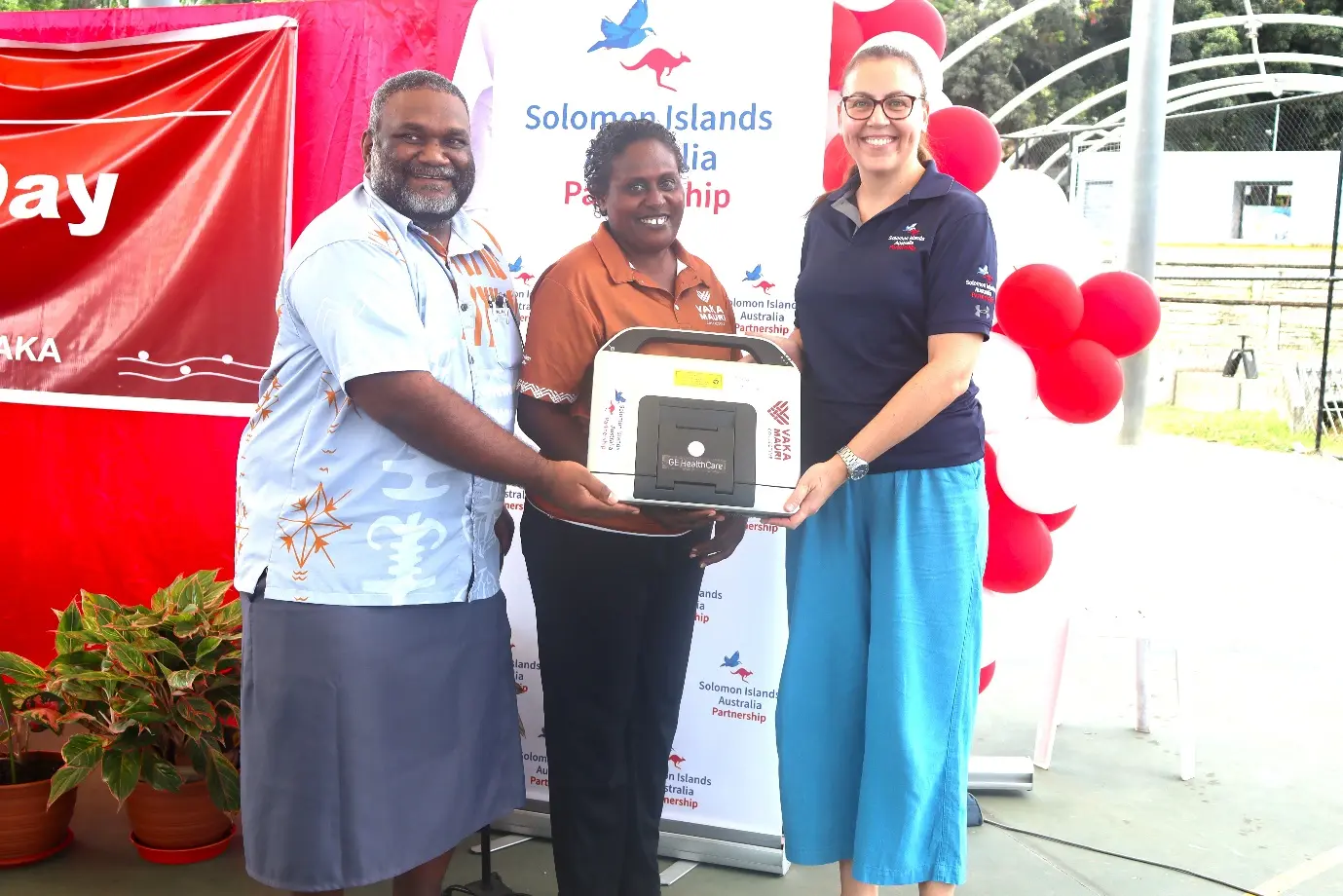
The Ministry of Health and Medical Services and its health partners marked World Heart Day in Honiara on 29 September under the theme "Don't Miss a Beat", with a focus on rheumatic heart disease.
Deputy Secretary Health Improvement Dr Nemia Bainivalu called for a coordinated national effort to prevent, detect and treat rheumatic heart disease (RHD) in Solomon Islands.
In his keynote address, Dr Bainivalu said RHD is serious but preventable. It can begin with what appears to be a simple sore throat, skin sores, high fever, or swollen and painful joints, he said.
According to the ministry, when certain bacterial throat infections are not recognised and treated, they can lead to acute rheumatic fever, and repeated episodes can permanently damage the heart valves and result in RHD.
Dr Bainivalu said the disease can mean regular medical appointments, long-term treatment and limits on daily life. In severe cases it can lead to heart failure, heart surgery overseas and premature death.
Prevention starts with awareness, early recognition, appropriate treatment and continued follow-up, he said. Parents and caregivers need to recognise when their children are unwell and seek care.
He said schools and teachers can help young people understand heart health, churches and community leaders can share health messages with families, and health workers have a critical role in early recognition, treatment, referral and ongoing care.
"The Ministry of Health and Medical Services cannot address RHD alone; health workers, provincial and city health services, schools, communities, families, civil society, and development partners all have important roles," Dr Bainivalu said.
He said people living with RHD must be heard, because their experiences can guide improvements in prevention, early diagnosis, treatment and support.
At the event, people living with RHD spoke about the symptoms they had experienced and how early diagnosis and treatment helped them, the ministry said.
The Australian Government, through the Department of Foreign Affairs and Trade (DFAT) and its partnership with the Vaka Mauri Collective, the Pacific RHD Programme, handed over a new ultrasound machine for echocardiography to the ministry.
The ministry said the machine will help strengthen the country's ability to screen school children and to detect and manage rheumatic heart disease.
Dr Bainivalu acknowledged the support of the Australian Government through DFAT, the Vaka Mauri Collective, Live & Learn Solomon Islands, health workers, technical partners and donors, schools, churches and communities for the Solomon Islands Rheumatic Heart Disease Programme.
The releases do not give the number of people in Solomon Islands living with rheumatic heart disease, or where the new machine will be based.