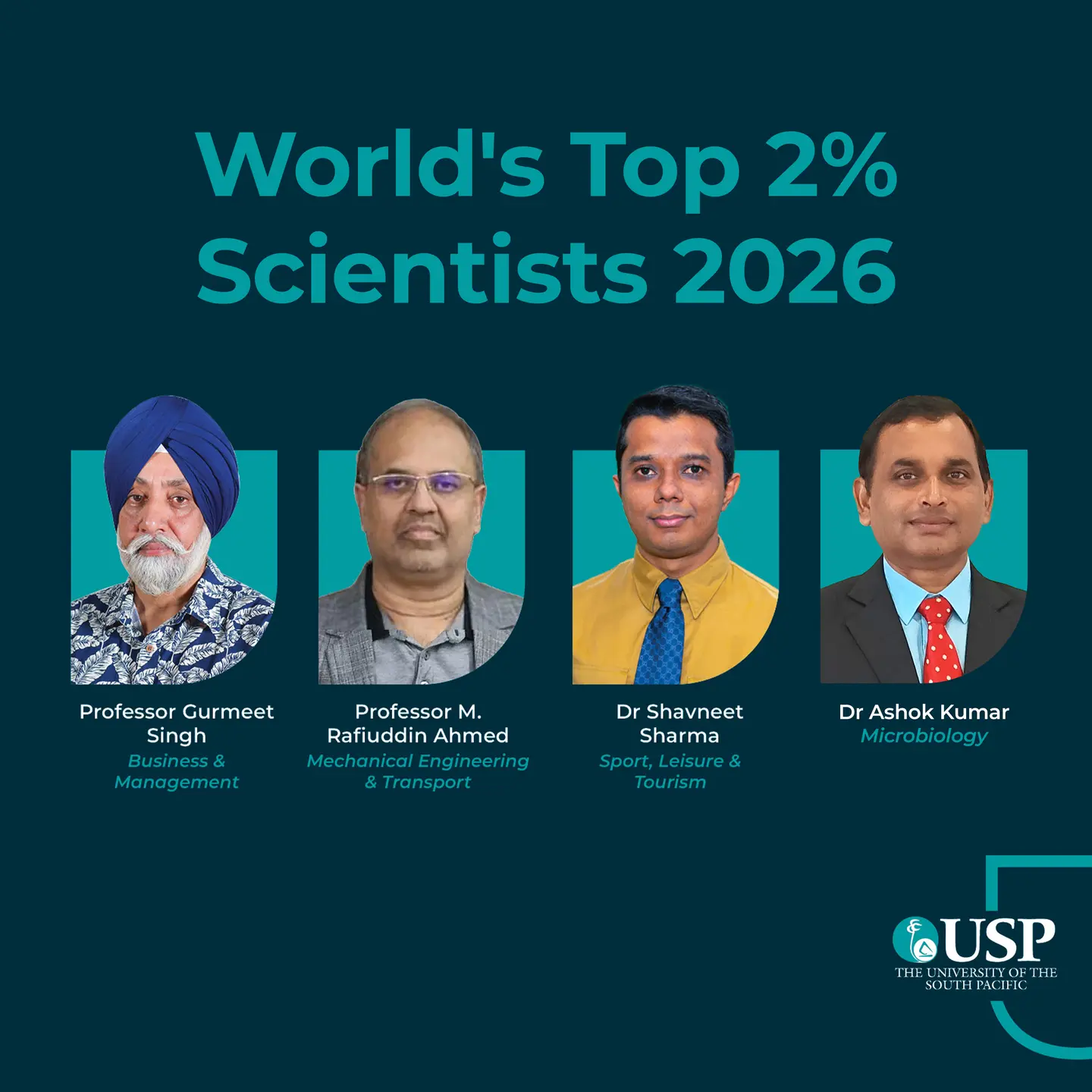
Four researchers from The University of the South Pacific (USP) have been named in the World's Top 2% Scientists list for work in renewable energy, business management, tourism and artificial intelligence, the university said on 30 October.
The list is compiled using research citation data and identifies scientists whose work has drawn significant international citation impact, USP said. The university said the four were Professor Gurmeet Singh in business and management, Professor M. Rafiuddin Ahmed in mechanical engineering and transports, Dr Shavneet Sharma in sport, leisure and tourism, and Dr Ashok Kumar in microbiology.
Singh's research covers digital technology adoption, consumer behaviour, sustainable business practices and tourism management. It examines how small and medium-sized enterprises take up digital technologies, how businesses balance financial performance with environmental sustainability, and how tourism and hospitality industries hold up during economic disruptions.
His work also covers internet banking adoption in Fiji, public sector reforms in Small Island Developing States and digital public services, and looks at ways to improve access, efficiency and trust in technology-enabled services. Singh said his inclusion showed that research of international standard could come out of regional universities and address regional challenges. He was named on the list in both 2025 and 2026.
Ahmed has spent more than 15 years researching renewable energy options for Pacific Island countries, including wind power, biofuels and ocean-based technologies. His work includes resource assessments and feasibility studies for ocean thermal energy conversion and seawater air conditioning, with findings passed to national energy departments for renewable energy planning.
His seawater air conditioning research fed into a US$3.8 million project to cool USP's Marine Science building, USP said. The system is expected to cut energy use and carbon emissions and to produce desalinated water, which could support the university's long-term water security.
"It gives a lot of satisfaction that my research, which is focused mainly on the South Pacific region, is still attracting a lot of citations globally," Ahmed said. He has been on the list every year since 2020, and said he hoped the recognition would encourage young researchers.
Sharma studies how people make decisions, use technology and respond to change in their communities, across consumer behaviour, tourism and emerging technologies. His tourism work looks at how tourism development shapes the attitudes, experiences and wellbeing of people in Pacific destinations, while newer work examines how people interact with artificial intelligence, including why they speak politely to AI systems and how that may affect their response to AI-generated recommendations.
It is the second year Sharma has been named on the list. He said it was encouraging to see research from Fiji receive international recognition.
Kumar's research covers antimicrobial resistance, including drug-resistant bacteria that cause infections after surgery, with findings aimed at antibiotic use, infection control and patient safety in Fiji and other Pacific Island countries. He is also studying microorganisms in mangrove-associated lichens for compounds that could treat infections, and said the recognition was an honour that motivated him to advance research in Fiji and the wider Pacific.