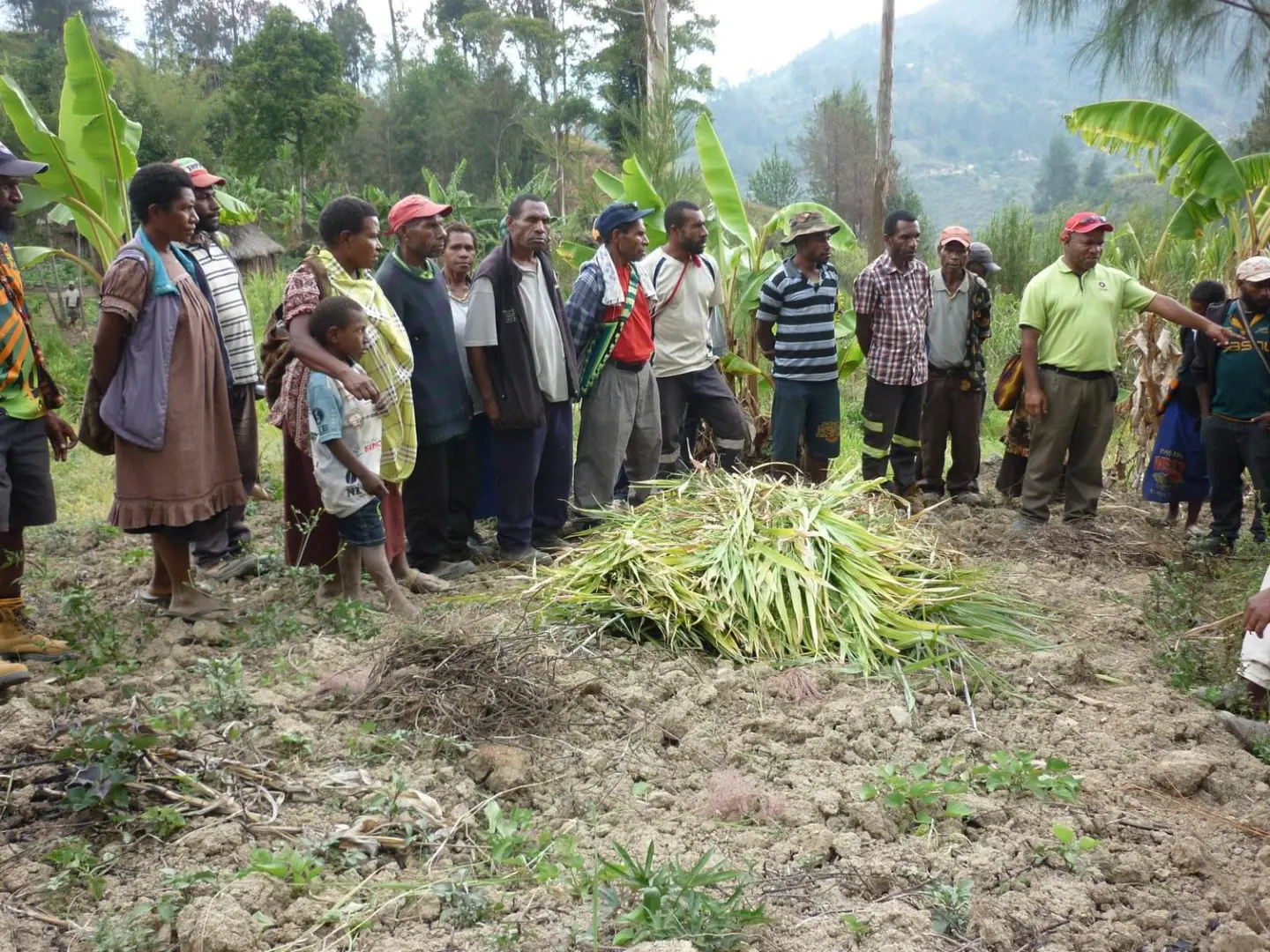
Drought losses can feed into the sequence that leads to sorcery accusation-related violence in Papua New Guinea, three researchers wrote on the Devpolicy Blog, as forecasts point to drier-than-normal conditions in the months ahead.
The article was written by Ali Moloney, who has worked with healthcare professionals in PNG for the past five years across primary health and curriculum design; Miranda Forsyth, a professor at the School of Regulation and Global Governance at the Australian National University and an Australian Research Council Future Fellow; and Dr Matt Mason, a Senior Lecturer in Nursing at the University of the Sunshine Coast and an infection prevention and control specialist who has worked with PNG since 2010.
In their database of reported sorcery accusation-related violence, or SARV, across four PNG provinces, sickness or death was the immediate trigger in almost 90 per cent of cases, they said. Almost any misfortune can become a trigger, including a bus breaking down, a business failing or a child doing poorly at school.
In the dataset, gathered over four years in four provinces from 2016 to 2020, they recorded one case of a person accused of destroying food crops, coffee trees and yard trees, and five cases of a person accused of killing a pig or pigs.
The authors described a case in Simbu province in September 2026 that one of them heard from a local healthcare worker. After a period of drought, several families had poor harvests, the community garden did badly and some pigs became sick.
A few people blamed an older woman, the authors wrote, and rumours spread, including on WhatsApp. Families confronted her, threatened her, pushed and kicked her and tied her hands, then locked her in a house while people went to look for evidence.
The healthcare worker found the woman bleeding and crying in a common area in the village, according to the article. She was rescued the next day with cuts and burns and carried to the clinic, where staff cleaned her wounds but had no pain relief to give her.
Whether the case is a sign of what is to come is not yet known, the authors said. It shows how drought-related losses can enter the familiar sequence in which misfortune triggers suspicion, an accusation gathers support and a person is attacked.
Research on climate and witchcraft accusations gives an incomplete picture, they wrote. Some studies link extreme weather and crop failure with more accusations or killings, while others find social and political conditions better explain the pattern.
A large cross-country study by Gershman found witchcraft beliefs were more widespread in countries with greater exposure to drought, they said, and a recent review of accusations against older women in sub-Saharan Africa lists crop failure among the misfortunes witchcraft is used to explain.
Drought can worsen food and water insecurity, illness and disputes over scarce resources, creating more triggers for accusations, the authors said. Whether that leads to violence depends on social relationships, economic pressure and the strength of local and state institutions.
PNG's planning for the dry conditions should include SARV prevention from the start, they wrote. That means identifying trusted people who can intervene when rumours start, setting clear routes to police, clinics, safe houses and human rights defenders, and preparing local explanations of crop failure and livestock sickness that do not allow blame to settle on an individual.