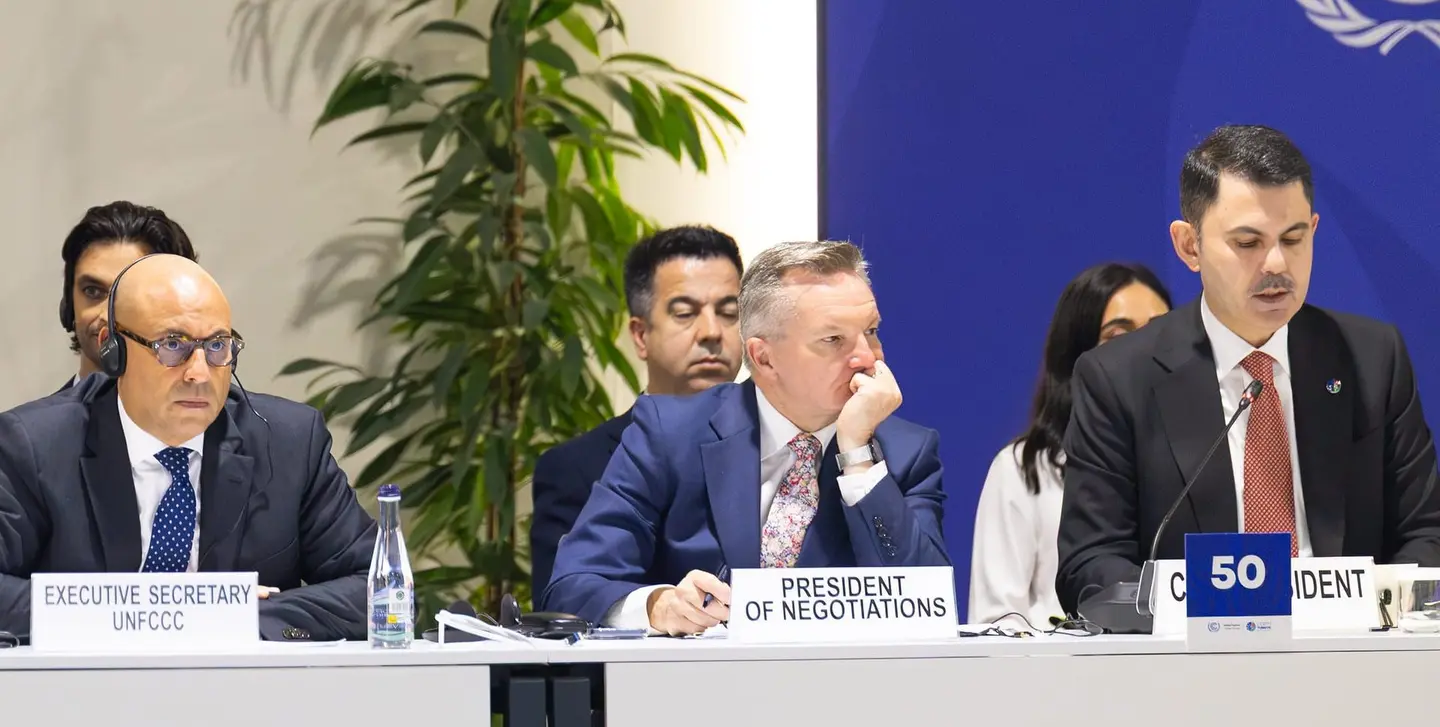
Pacific nations should no longer look to Australia for climate leadership after COP31 closed without an overarching political agreement, independent researcher Michael J. Smith wrote on the Devpolicy Blog.
Smith works on Pacific climate justice, human rights, decolonisation and community-led resilience. Decisions were adopted under existing climate work programmes at the conference, he wrote, but no cover decision was secured.
When Australia withdrew its bid to host COP31 in November 2025, the Albanese government presented its appointment as President of Negotiations as a diplomatic achievement, promising influence over international climate negotiations and a chance to advance the interests of its Pacific neighbours, Smith wrote. Twelve months later, Australia and Türkiye presented a proposed agreement that did not explicitly mention fossil fuels.
The proposed Antalya Pact did not reaffirm the commitment made at COP28 to transition away from fossil fuels in energy systems, he wrote. Instead it proposed scaling up carbon capture, utilisation and storage to gigatonne levels globally by 2035.
The text also dropped a reference to the International Court of Justice advisory opinion on climate change, won through years of Pacific-led advocacy. The first draft, circulated on 16 November, welcomed the opinion of 23 July 2025; the revision of 19 November weakened that language; and the text put to parties on 22 November, and rejected, left it out altogether, Smith wrote.
Decisions were adopted on adaptation, just transition, climate finance and other established work programmes, but COP31 did not deliver the greater political ambition vulnerable nations need, he wrote. For Australia, the outcome exposes a contradiction between its climate diplomacy and its domestic economic policies.
Australia is the world's largest exporter of metallurgical coal and the second-largest coal exporter overall by volume, Smith wrote. The International Energy Agency's latest World Energy Outlook projects that Australia could overtake Indonesia as the largest coal exporter in energy-equivalent terms under its Current Policies Scenario.
As Minister for Climate Change and Energy and COP31 President of Negotiations, Chris Bowen represented a government that continues to approve new and expanded coal and gas developments, he wrote. Some approvals extend coal mining into the 2060s, the approved extension of Woodside's North West Shelf gas facility runs to 2070, and an approval given in March 2026 to Australia Pacific LNG's Gas Supply Security Project in the Surat and Bowen basins has effect until 22 February 2081.
Bowen said disagreements between countries prevented consensus on the transition away from fossil fuels. Australia's own capacity to act does not depend on resolving those disagreements, Smith wrote, and the government could end approvals for new fossil fuel projects, set out a managed transition strategy and support affected workers.
Pacific countries are showing that international leadership does not require the wealth of the largest economies, he wrote. Vanuatu rejected the proposed cover decision at COP31, saying consensus could not come at the expense of its people's survival and sovereignty, after leading the campaign that secured the ICJ advisory opinion.
Outside the formal negotiations, the coalition of Global South countries developing the proposed Fossil Fuel Non-Proliferation Treaty grew to 30, Smith wrote. Tuvalu and Ireland will co-host the second international conference on transitioning away from fossil fuels in July 2027.