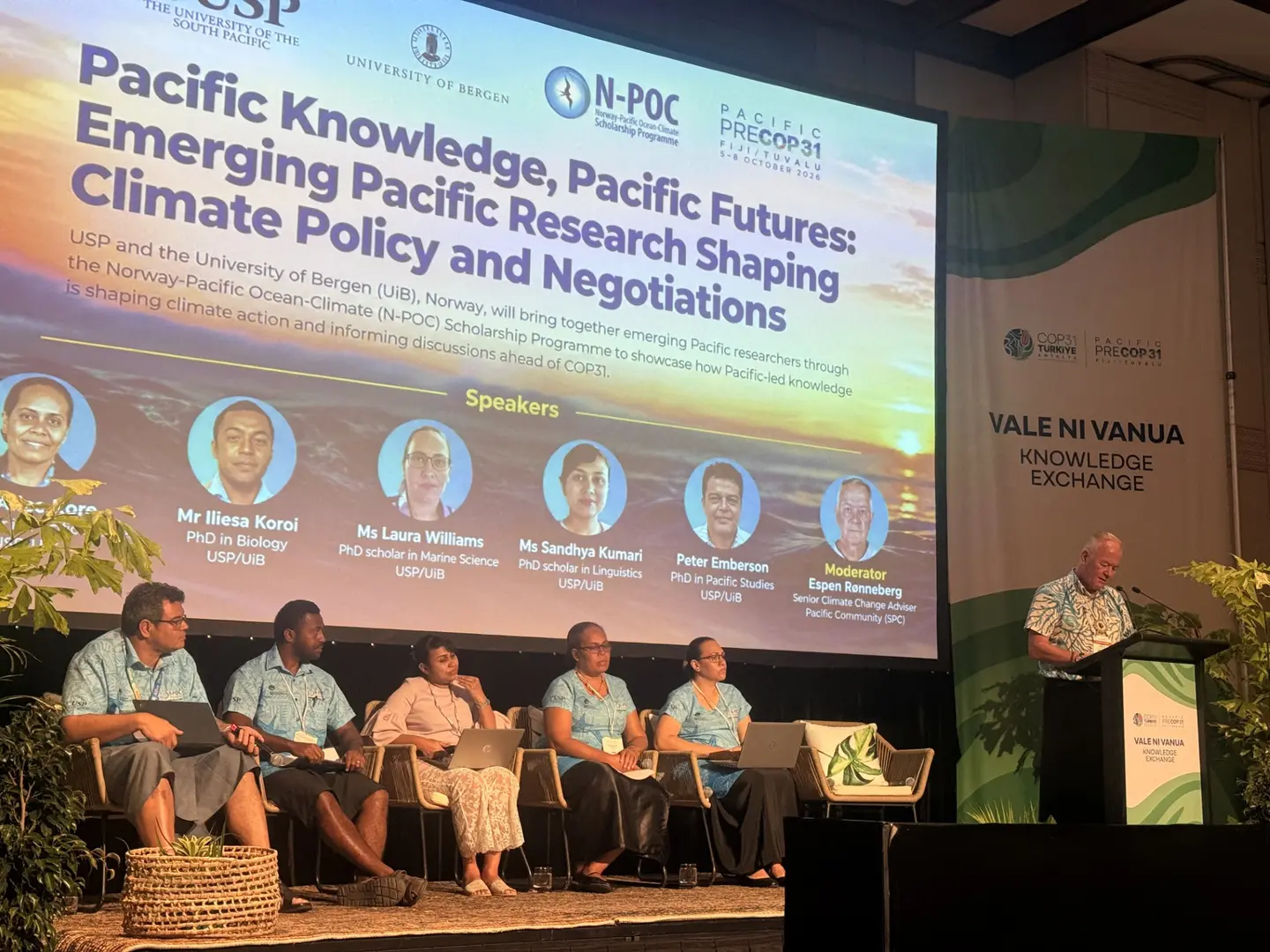
Five Pacific PhD scholars presented research on coastal water quality, forest genetics and displacement at the pre-COP31 event in Nadi, Fiji, The University of the South Pacific (USP) said on 4 November.
The scholars are supported by the Norway-Pacific Ocean-Climate Scholarship Programme (N-POC), a partnership between the University of Bergen (UiB) in Norway and USP. The university said their work showed how Pacific-led knowledge was shaping climate solutions ahead of the negotiations.
PhD scholar in marine science Laura Williams presented research on the health of coastal waters from Laucala Bay to Suva Harbour in Fiji. She said the areas were productive and supported marine life, fisheries and local communities, but were under growing pressure from urban development, river runoff, sewage discharge, industrial activity and shipping.
"When we talk about climate change, we often think about planting more trees. And rightly so. But what many people don't realise is that the ocean is one of our greatest allies, producing about half of the oxygen we breathe and playing a critical role in regulating our climate," Williams said.
The aim of the work, she said, was to give scientists, managers and policymakers the information needed to make better decisions on managing Fiji's coastal waters, supporting sustainable fisheries and protecting marine ecosystems.
PhD in biology candidate Iliesa Koroi presented findings on genetic diversity in Fiji's forest plantations. He said his study examined genetic markers in trees across three sites and found a rich, well-mixed gene pool, which he described as a living library of genetic possibilities for a changing climate.
Koroi said the practical steps were to monitor genetic diversity alongside forest condition and pest threats, to protect the distinctive diversity found in the Suva trees, and to link benefit-sharing to genetic resources as well as timber. He said climate finance could help turn the findings into action, with landowners helping shape decisions about resources on their land.
PhD scholar in linguistics Sandhya Kumari presented research on the effects of displacement on the people of Banaba and on traditional ocean knowledge recorded in the Banaban and Kiribati dialects. She said the Banaban experience could inform discussions of climate mobility in Kiribati while respecting the different histories involved.
Forced relocation meant leaving behind ancestral lands and the bones of ancestors, Kumari said, and put traditional knowledge and practices at risk. Ocean and climate discussions at COP31 should look beyond land, housing and infrastructure to the knowledge, memories and relationships that make a place home, she said.