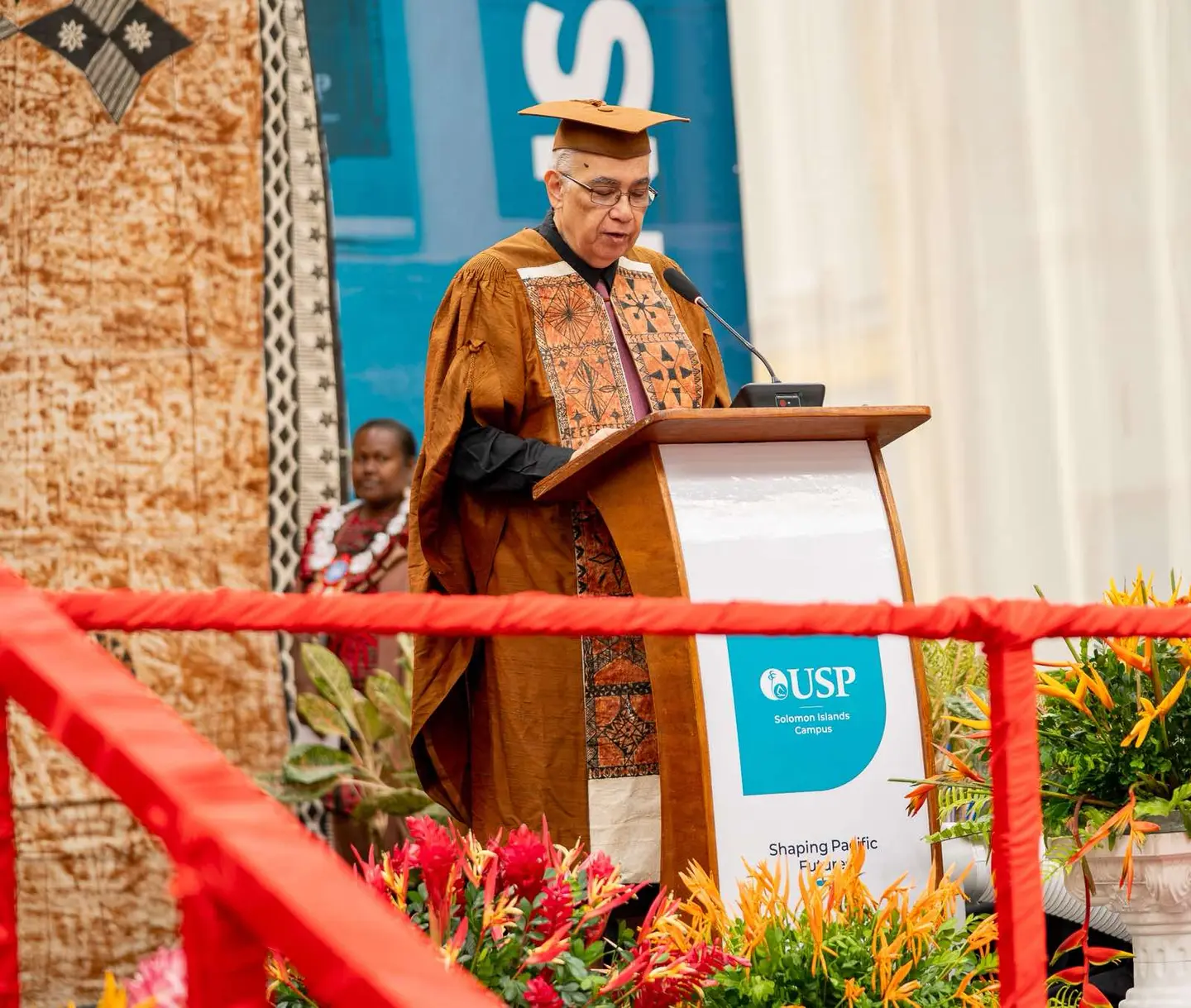
Graduates of The University of the South Pacific (USP) form the next chapter of Pacific regionalism, Pro-Chancellor and Chair of Council and Interim Management Group Siosiua Utoikamanu said in Honiara on 25 September.
Utoikamanu gave the graduation address at the 2026 USP Solomon Islands Graduation Ceremony at Friendship Hall.
He said USP was an enduring expression of Pacific regionalism, built on the belief that Pacific countries can achieve more together by investing in their people, knowledge and shared capabilities.
Utoikamanu said he was reflecting on a challenge set by Solomon Islands Prime Minister Matthew Wale at the Fifth Pacific Climate Change Conference the previous week, which he summarised as turning Pacific knowledge into Pacific action.
According to the release, Wale told that conference the Pacific was not merely a place where climate impacts are observed, but a source of knowledge, leadership, law, innovation and solutions.
Utoikamanu said that message reached beyond climate change and spoke to the purpose of USP and the responsibility of its graduates. Pacific knowledge could be created, tested and taught in the region and taken from there to the world, he said.
He said the university was founded nearly six decades ago on the belief that countries separated by long distances, with different cultures, languages and national priorities, could build and own a university together.
"USP was not created simply to bring university education to the Pacific. It was created so that Pacific countries could build university education together," Utoikamanu said.
He said the university was created by Pacific countries, was collectively owned by them and existed to serve the needs of Pacific peoples. Tens of thousands of graduates had left ceremonies like this one to work across the region, he said, and the most enduring infrastructure the university had built in the Pacific was human.
Utoikamanu said investment in education had to keep strengthening Pacific capability, and that partnership with the region should leave greater capability within the region.
He told graduates to combine the idealism that established USP with the discipline to turn knowledge into practical solutions, saying enough idealism was needed to imagine what did not yet exist and enough pragmatism to make it happen.
Regional cooperation remained central to the Pacific's shared challenges, he said, because there were things Pacific countries could achieve together that none could achieve as effectively alone.