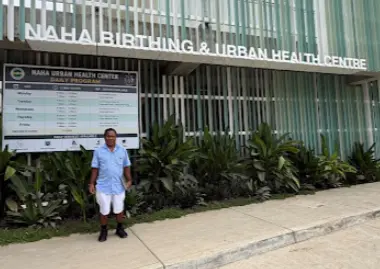
The Naha Birthing and Urban Health Centre in Honiara has moved its patient records from paper registers onto a digital system, the World Health Organization said on 29 October.
Staff at the centre see more than a hundred patients a day. WHO said nurses once spent much of their time searching through books, compiling reports by hand and tracking patient information across several registers.
At the centre of the change is head nurse Ataban Teimana, who has become an advocate for District Health Information Software 2, known as DHIS2, which allows clinics to store and look up patient information electronically. Teimana said it was always his dream to move from manual records to digital information, and that he would ask people who visited the facility whether there was a platform that could digitise its records.
Before DHIS2, one patient could have information in several different books, and finding something took a long time, Teimana said. Paper records could also be misplaced, damaged or become hard to retrieve.
When Naha opened its new facility, with computers and improved infrastructure, Teimana saw an opportunity to work differently. WHO developed the health information system within DHIS2 with the Ministry of Health and Medical Services and trained health workers, with support from the Australian Department of Foreign Affairs and Trade.
The change was not easy at first, Teimana said. Using computers as part of routine clinical work was new for many nurses, and some were unsure about it while managing busy patient loads. Staff also had to learn to enter information correctly and consistently as they got used to the software.
Within weeks, nurses who had been hesitant began to see the benefits and now take responsibility for entering good quality data, he said.
Nurses can now find a patient's history in seconds rather than searching through multiple record books, Teimana said. The system also shows which communities patients come from and their background, which he said helps staff relate to them and build trust.
Managers and supervisors no longer have to wait for monthly reports and can respond faster to emerging issues, WHO said. Teimana said the data shows which communities are experiencing more sickness, which helps the facility set priorities and focus on the places that need attention most. Quality data must be timely, accurate and complete so that decision-makers can respond quickly, he said.
Teimana has no formal information technology background. He said people now look at him as an IT person as well, but that he is still a nurse, and he credited the encouragement of the training team, in particular WHO Solomon Islands Health Information Systems Officer Vasco Nuno Carvalho.
"Digital health should make care better for people," Carvalho said. He said Teimana is helping his team use patient information to understand people's needs and provide more connected care, which means patients spend less time waiting and health workers can follow their care more easily.
WHO said the experience at Naha will help guide the rollout of digital health systems in other facilities around the country.