Many women in Papua New Guinea are having more children than they say they want, and family planning services do not reliably meet that demand, according to an article published on the Devpolicy Blog.
The article was written by Kingtau Mambon, an economics lecturer at the University of Papua New Guinea specialising in quantitative, natural resource and environmental economics. It draws on his report for the PNG Reset@50 project, "Big Bet 3: Enable universal access to voluntary family planning services".
PNG has one of the highest fertility rates in the Asia-Pacific region and the highest of any Pacific Island country in its most recent Demographic and Health Survey, conducted in 2016-18, Mambon wrote. The population has passed 10 million and grows by about 230,000 people a year.
Schools, hospitals, policing and the formal labour market have expanded far more slowly, he said, with the results visible in crowded classrooms, stretched health facilities, law and order problems and young people competing for too few formal jobs.
The total fertility rate fell from 4.4 births per woman in 2006 to 4.2 in 2016-18, while wanted fertility is about three children, according to the article. Mambon said policy should begin with that gap and should support free and informed decisions rather than impose a preferred family size.
He described the problem as one of conversion. In the 2016-18 survey, 88 per cent of currently married women and 92 per cent of currently married men knew at least one contraceptive method, and both knew about six methods on average, but only 37 per cent of married women were using any method and 31 per cent a modern method.
About one quarter of currently married women had an unmet need for family planning and only 59 per cent of total demand was satisfied, he wrote. Unmet need among sexually active unmarried women was estimated at about 65 per cent.
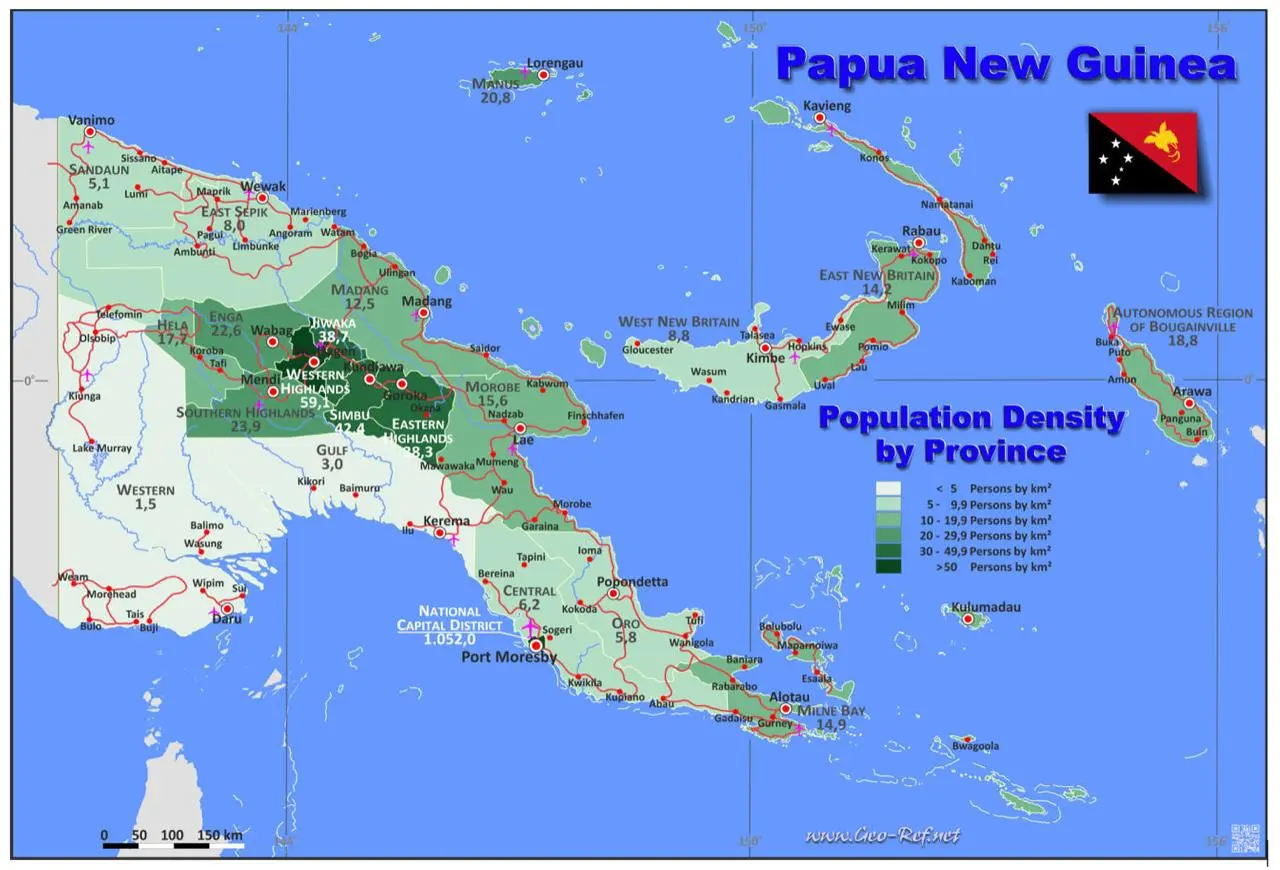
Access is uneven. Contraceptive use among married women was 50 per cent in urban areas and 35 per cent in rural areas, and 46 per cent in the highest wealth quintile against 23 per cent in the lowest. The Highlands is the lowest-performing region, Mambon said.
About 89 per cent of modern contraceptive users obtained their method from a public-sector source, he wrote, so shortages of supplies, trained staff, privacy or outreach in government facilities affect access nationally.
Only 37 per cent of women using contraception said they had been told about possible side effects, what to do about them and alternative methods, according to the article. Among women not using contraception, 85 per cent had not discussed family planning with a field worker or anyone at a health facility.
Mambon said the third National Population Policy 2015-24 has expired and the focus should move to a fourth policy and a funded national voluntary family planning programme.
The research was supported by the ANU-UPNG Partnership, an initiative of the PNG-Australia Partnership funded by the Australian Department of Foreign Affairs and Trade, according to a disclosure in the article.