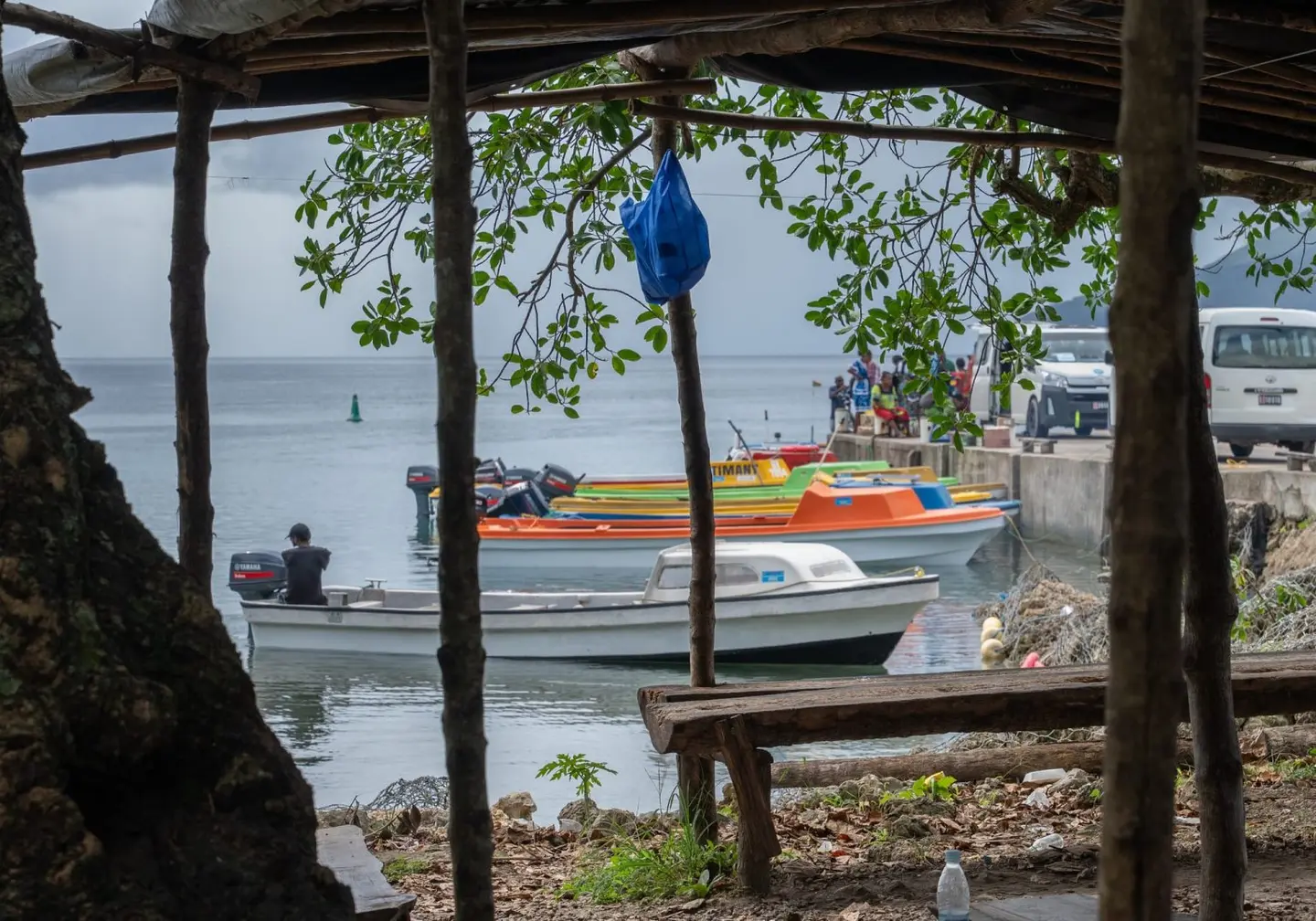
Pacific countries that delay action on growing HIV outbreaks would pay about twice as much each year and prevent fewer infections, four authors wrote on the Devpolicy Blog after modelling an emerging outbreak.
They are Associate Professor Caroline van Gemert, a principal research fellow at Burnet Institute; Dr Anna Bowring, a senior research officer at the same institute; Dr Jason Mitchell, chair of Fiji's National HIV Outbreak and Cluster Response Taskforce; and Professor Donald Wilson, Pro Vice Chancellor Research and Innovation at Fiji National University.
Communities across the Pacific are facing growing HIV outbreaks while health budgets are constrained and international development assistance is uncertain, the authors wrote.
Fiji has one of the fastest-growing HIV epidemics in the world, with new infections rising about twelvefold between 2010 and 2025. Papua New Guinea has declared a national HIV crisis, and several other Pacific island countries and territories are reporting early warning signs of increased transmission, they wrote.
The authors used Optima HIV, a mathematical and economic modelling tool, to model a hypothetical Pacific island country of 100,000 people with an emerging outbreak, drawing on regional epidemiological, behavioural, service and cost data.
They compared current approaches with an optimised response: treatment and adherence support for people already diagnosed, plus targeted prevention and testing for key populations. The response was tested across several outbreak profiles, starting in either 2027 or 2030.
Doubling annual HIV investment from 2027, from about US$32,700 to US$65,500 per 100,000 people a year, and optimising the response was projected to avert more than 90 per cent of new infections by 2040, they wrote.
Delaying until 2030 would cost on average US$132,500 per 100,000 people a year to achieve a similar result, about twice the annual cost of starting in 2027, and would avert fewer infections, 86 per cent.
Transmission compounds over time, so preventing one infection also prevents infections further along the chain, the authors wrote. As an outbreak accelerates, a much larger investment is needed just to regain lost ground.
Scaling up treatment, engagement in care and adherence support did the most to increase viral suppression and prevent onward transmission in the model.
In Fiji, only 56 per cent of reported people living with HIV were receiving antiretroviral treatment at the end of 2025, and only 15 per cent of those on treatment had documented viral suppression, the authors wrote. The Joint United Nations Programme on HIV/AIDS puts coverage across all people estimated to be living with HIV in Fiji at about 22 per cent.
Testing and prevention services designed for key populations had a bigger impact than generalised testing and condom programmes, they wrote, because that is where the virus spreads.
Costs would rise before they fall. About 31 per cent of people living with HIV were diagnosed in 2025 in the model, so expanded testing finds many more people needing treatment and adherence support, raising costs in the short term.
Within about a decade, an optimised response was projected to need fewer treatment and adherence resources than continuing with current approaches, they wrote.
The findings are not a prescription for any individual country, the authors wrote. In many Pacific countries it is not yet clear what is driving the rise in infections or which populations are affected, which is why timely local surveillance data matters.
At the 17th Pacific Heads of Health meeting in Rarotonga in August 2026, heads of health accepted two recommendations, they wrote.
The first is that every Pacific island country and territory develop or strengthen a national HIV preparedness and response plan within 12 months, including functional surveillance and real-time early-warning indicators. The second is that a Pacific HIV Regional Support Mechanism be set up within 18 months.